
About All ToursFrom Jaipur ToursWildlife Safari ToursPrivate ToursTiger Safari Tours Directions Hours & Fees Guides
Find Tours 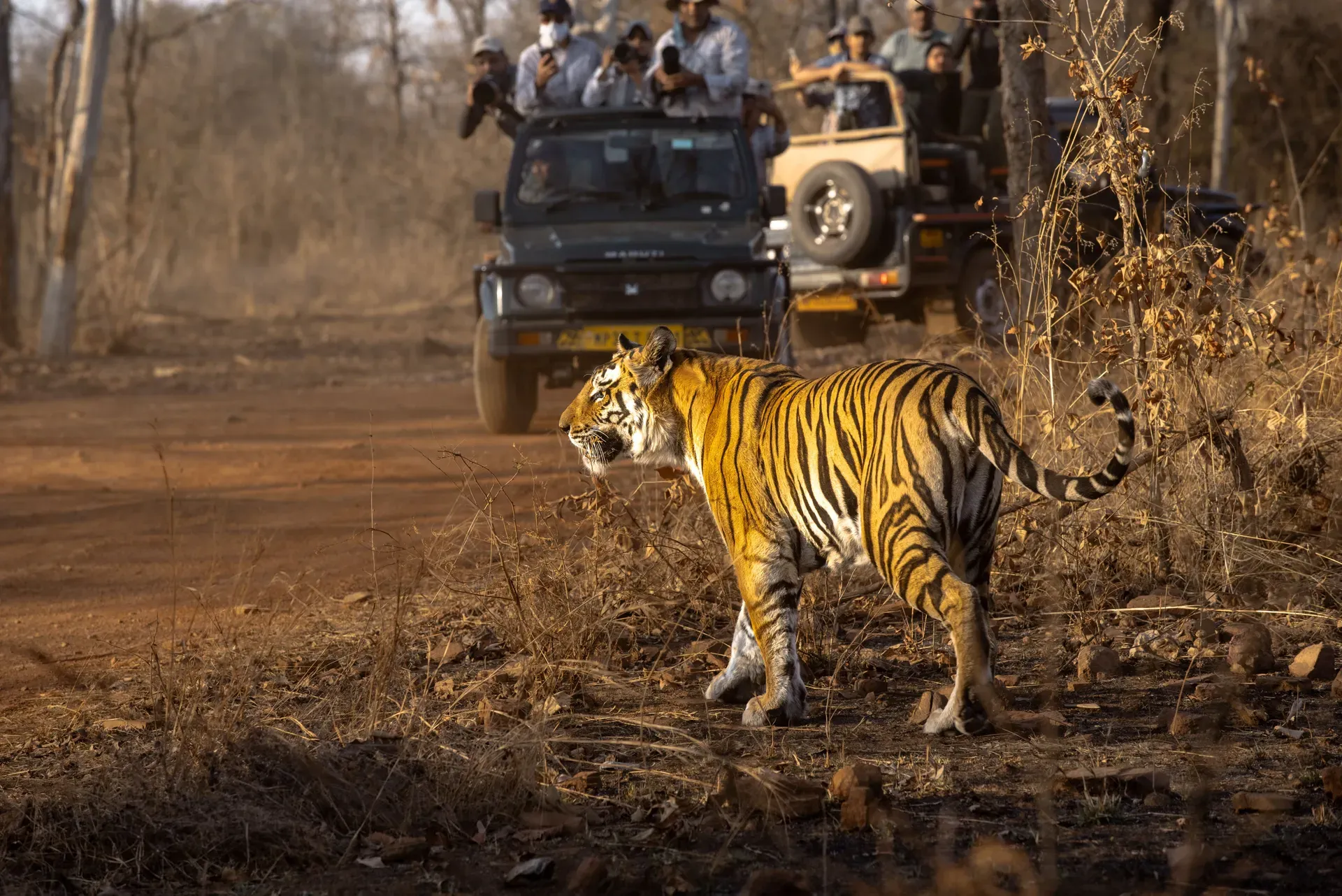
Track wild Royal Bengal tigers through one of India's best tiger reserves on a Ranthambore wildlife safari, available as shared jeep or canter rides from the park, or as day trips from Jaipur and multi-day Golden Triangle tours. Most safaris run twice daily at dawn and in the afternoon, with local guides who know the park's zones and tigers by name.

4-hour shared tiger safari from Sawai Madhopur hotels, by 6-seat jeep or 20-seat canter.
 Free Cancellation
 Four-day private Golden Triangle circuit from Delhi with a Ranthambore tiger safari, guides in five languages.

Shared 3-hour tiger safari in a 20-seater canter, with hotel pickup, drop-off, and an English-speaking guide.
 Free Cancellation
 Day trip from Jaipur with private car, a 3-hour afternoon canter or gypsy safari, and a museum stop (10 hours total).
 Free Cancellation
 12-hour all-inclusive day trip from Jaipur: private AC car, 3-hour jungle safari in a Canter or Gypsy, lunch and entrance tickets.
 Free Cancellation
 7-day private Golden Triangle tour from Delhi with two Ranthambore safaris and hotels, guide, and breakfasts included.

8-day private Golden Triangle circuit (Delhi, Agra, Jaipur) with two shared game drives in Ranthambore.

3-hour private gypsy safari in Ranthambore with park tickets, English guide, and optional Jaipur or Delhi pickup.
 Free Cancellation
 Full-day Jaipur round trip with hotel pickup, entrance fees, and a Gypsy or Canter safari at Ranthambore.

Private full-day trip from Jaipur to Ranthambore with an afternoon jeep or canter safari, park fees and hotel pickup included.
Read what travelers share about their experience visiting Ranthambore National Park — from practical tips to personal highlights.
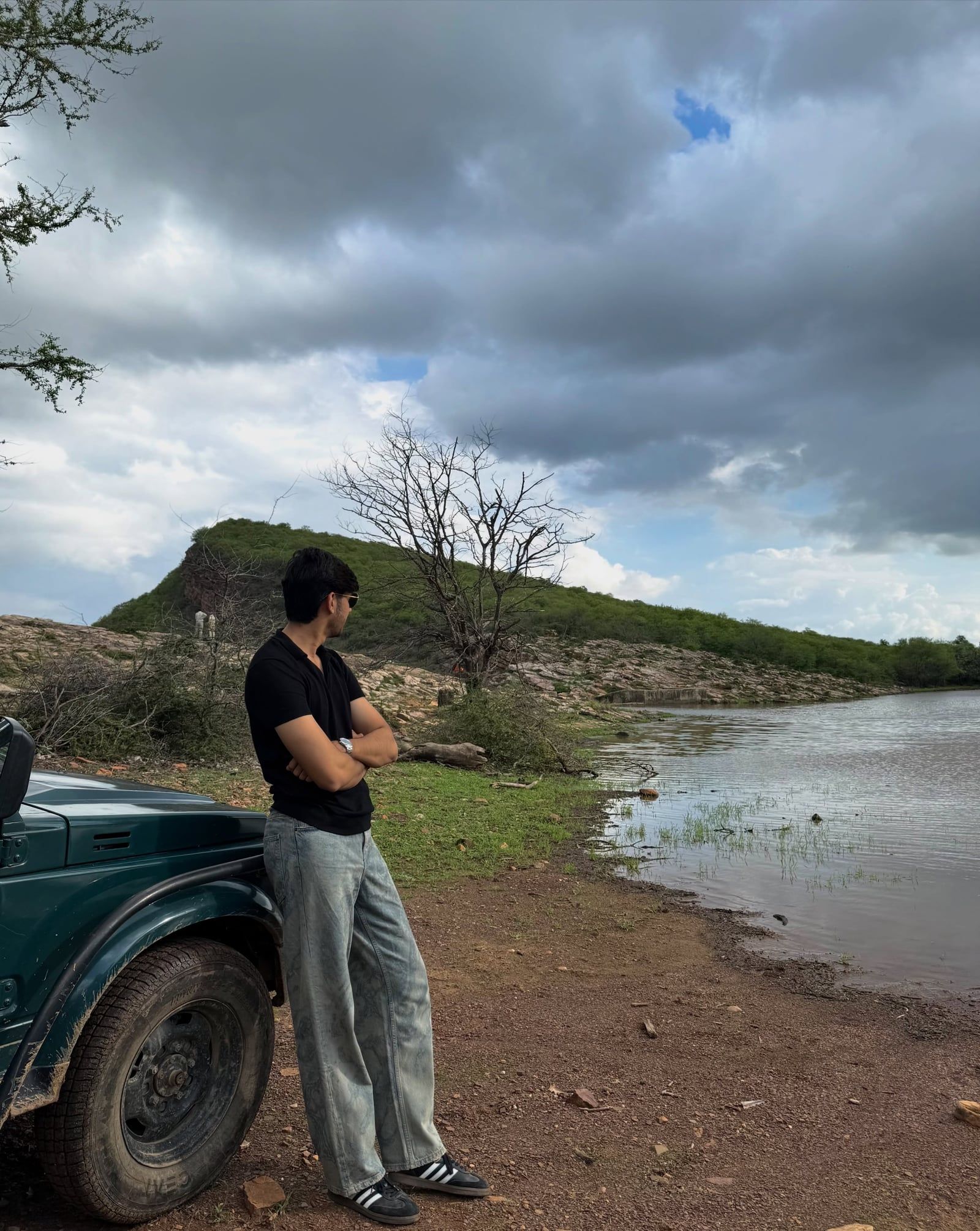
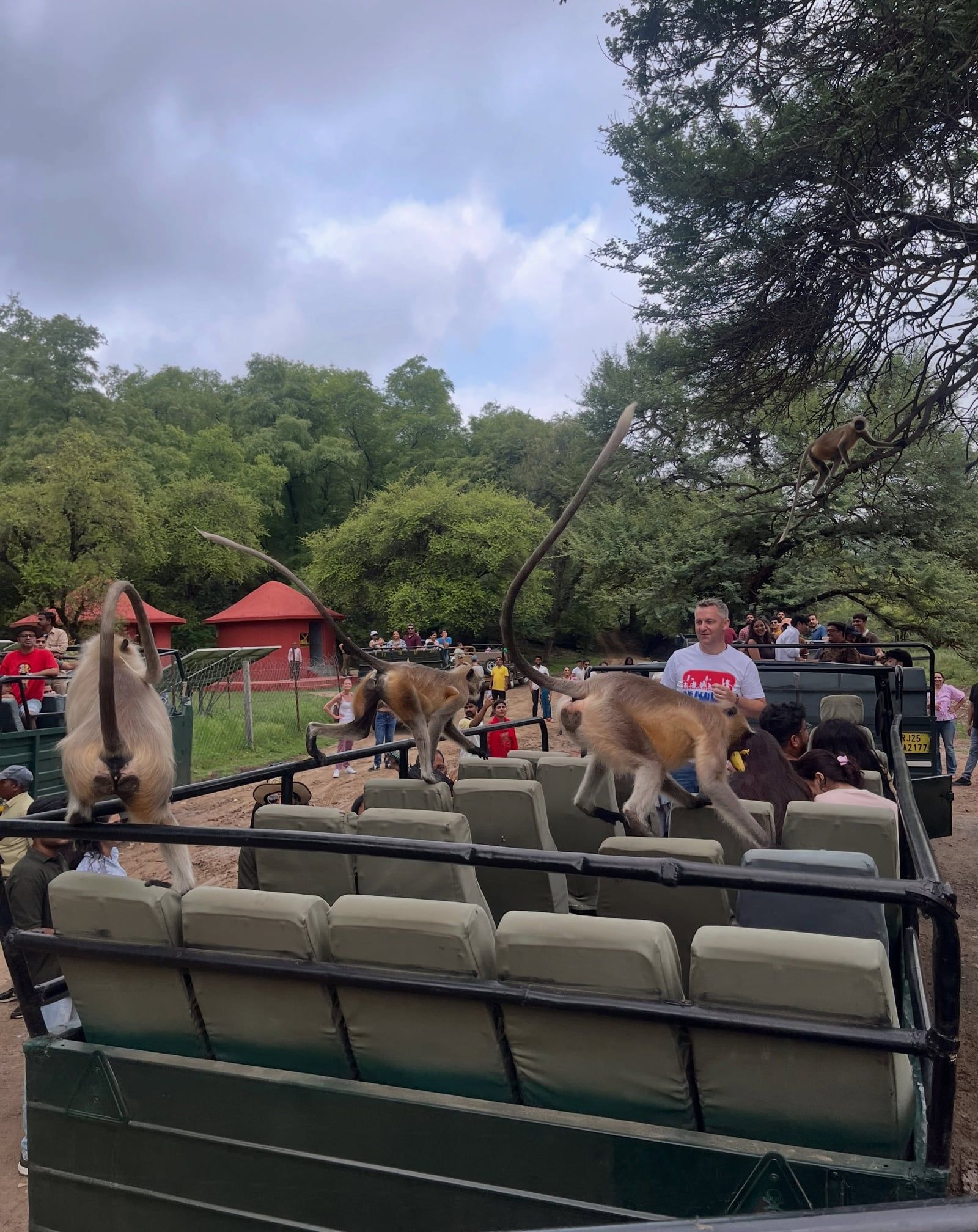
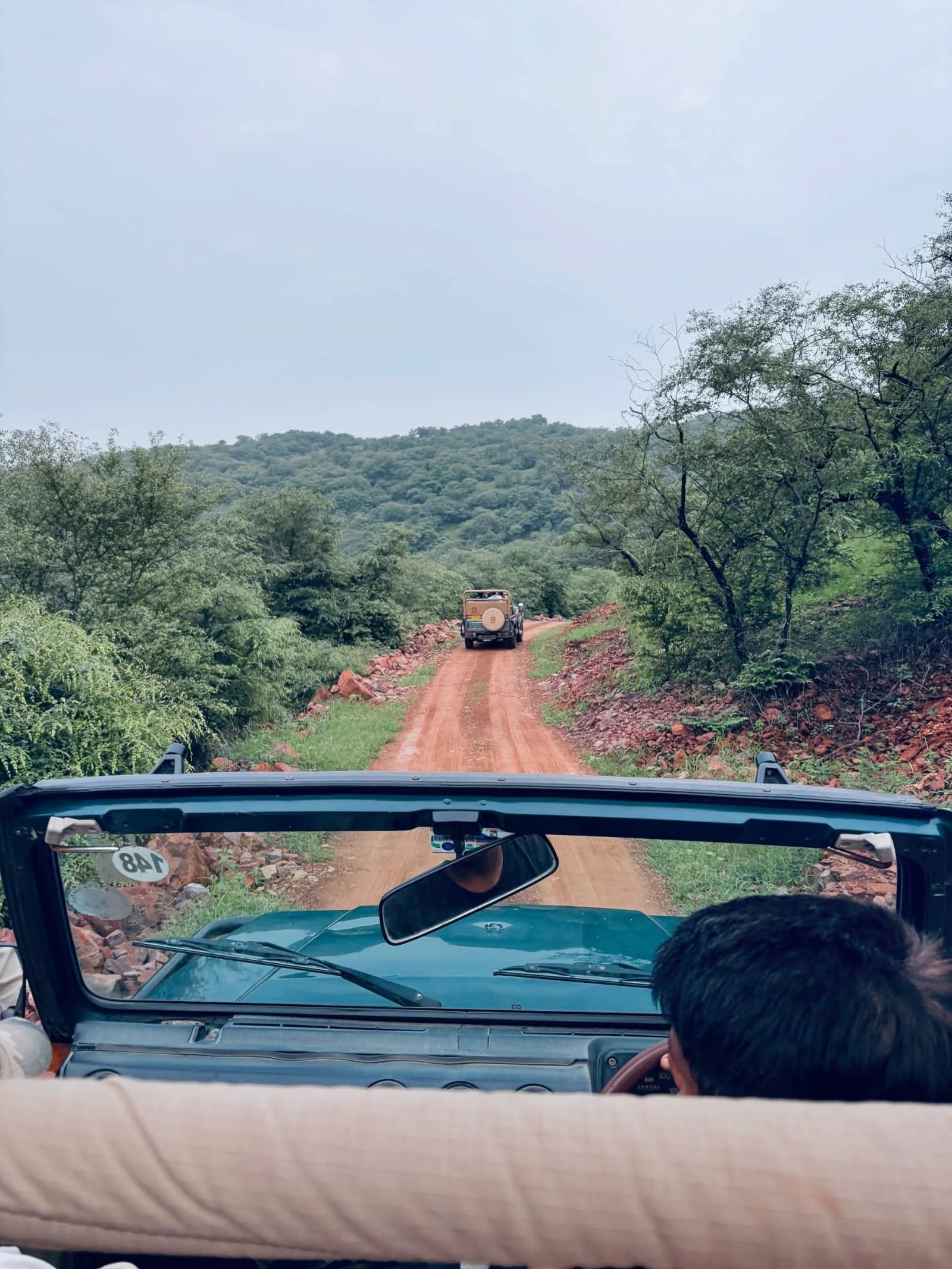
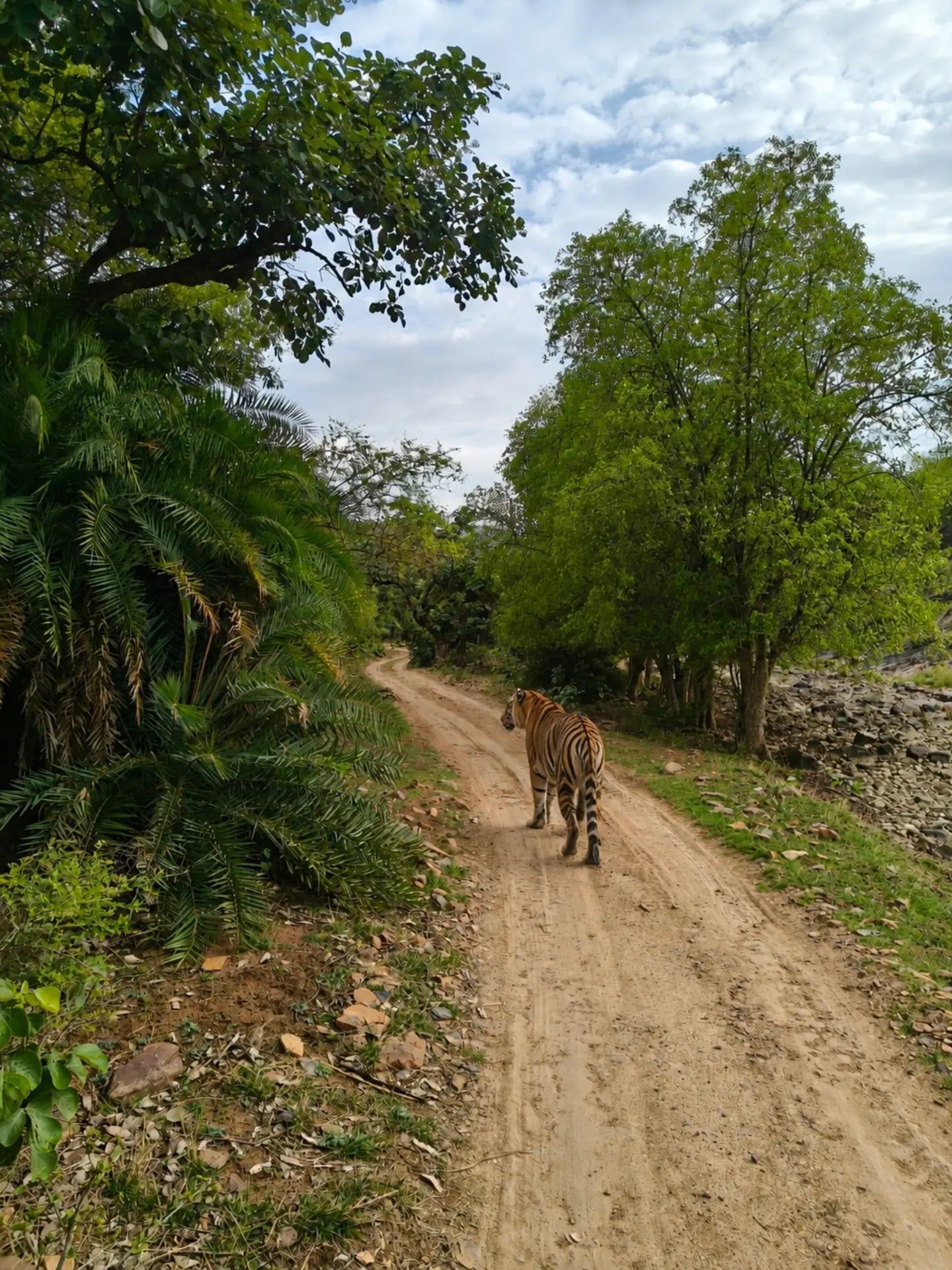
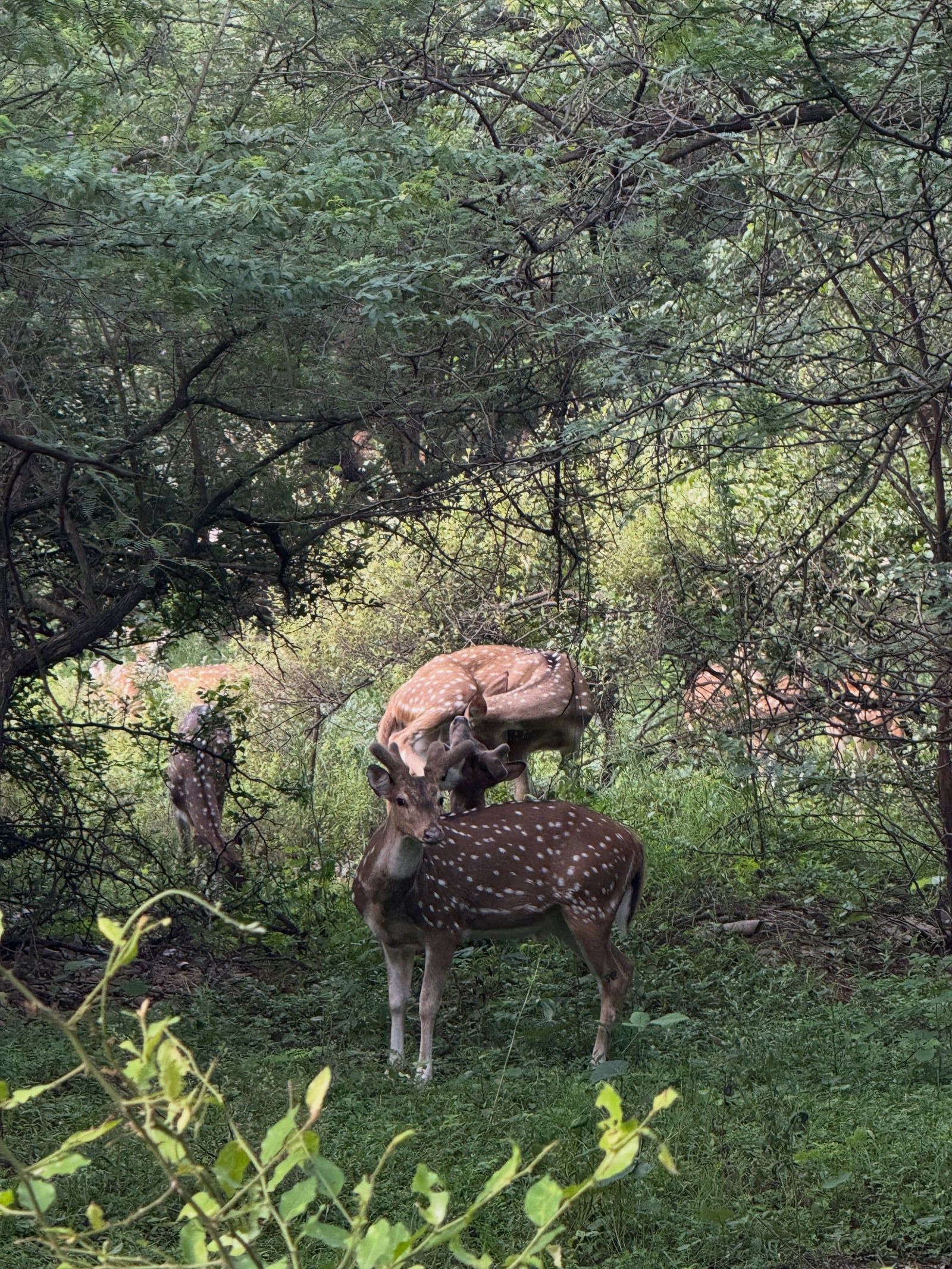
Every Ranthambore safari is a 3.5-hour game drive through dry dhok forest, lakes and ruined pavilions in an open 6-seat Gypsy or 20-seat canter, with a government guide aboard. Around 88 tigers live in the reserve, and they're unusually relaxed around vehicles — this is one of the few places on earth where tigers hunt sambar in daylight in front of photographers. The fort above the treeline, a 10th-century UNESCO site, keeps watch over the whole drive.
Tigers here lounge on the tracks and drink at the lakes in full view of vehicles. Sightings peak in April-June, when drying water holes pull tigers and prey to Padam Talao and Rajbagh Lake. Most visitors who do 3-4 drives see at least one.
The park's largest lake is fringed by blooming water lilies and the red-roofed Jogi Mahal, a former royal hunting lodge. Sambar come to drink at first light while painted storks, herons and mugger crocodiles work the shallows below the fort ridge.
Zone 3 holds crumbling pavilions, arches and stepped baths standing half-drowned in water and strangler figs. Egrets stalk the flooded lawns and tigers often cross between the old stones — the exact scene from countless documentaries.
The rocky Kachida Valley and Anantpura-Bhakola tracts in Zone 4 and the buffer are your best bets for leopard and sloth bear, plus striped hyena, caracal and jackal. Early morning drives through these quieter zones regularly turn up leopards on the rocks.
Crested serpent eagles and changeable hawk-eagles hunt from bare trees, and Indian paradise flycatchers flit through the dhok forest. Winter adds migrants; the Zone 3 lake margins concentrate painted storks and herons in the hundreds.
Ranthambore Fort rises 700 ft above the jungle and joined UNESCO's World Heritage list in 2013. Inside the walls sit the Trinetra Ganesh temple and 12th-13th century Hindu and Jain shrines, and the ramparts give the best panorama of the reserve. No safari permit needed.
Safari seats, permits and zones work differently here than at most parks, and a few rules changed recently. Read this before you pay anything.
Shared canter (20 seats) and Gypsy (6 seats) safaris from Sawai Madhopur run 3-4 hours including hotel pickup. Day trips from Jaipur last 10-12 hours with roughly three hours of driving each way. Multi-day Golden Triangle tours (4-8 days) wrap the Taj Mahal, Agra and Jaipur around two safari drives. If you're sleeping in Sawai Madhopur, the shared safari is the value pick.
Core-zone permits and Gypsy seats sell out weeks ahead in peak season. The official channel is the Rajasthan Forest Department booking system via SSO login at sso.rajasthan.gov.in, capped at six bookings per account per month. Hotels and tour operators book on your behalf; agent sites with official-looking names charge large markups.
Permit, vehicle and mandatory guide come as one ticket: shared canter about INR 1,500 per Indian and INR 3,800-4,550 per foreigner, shared Gypsy INR 2,200-2,500 and INR 4,500-5,500. On tour platforms, shared safaris with pickup start around $32-48 and private Gypsy packages around $120. Tips are extra — carry INR 200-300 in small notes each for driver and guide, per drive.
You cannot choose your zone. Forest officials allot it by computer at check-in, and no outside interference is allowed. Zone 3 (Padam Talao, Rajbagh, Jogi Mahal) has the best scenery and sighting rates, with Zones 2 and 4 close behind. Anyone promising a guaranteed zone is lying to you.
Since 1 February 2026, mobile phones of any kind are banned in the core tourism zones — no calls, photos, video or social media, and the rule binds drivers and guides too. Phones can be confiscated and offenders removed without refund. Leave yours in the lodge safe and bring a standalone camera; flash is banned near animals and drones are prohibited outright.
Tourism runs 1 October to 30 June only. The core park closes for monsoon from 1 July to 30 September, though zones 6-10 sometimes operate at the Forest Department's discretion. Zones 1-5 also shut every Wednesday and zones 6-10 every Tuesday — check the rotation before stacking back-to-back dates.
Safari permits are non-refundable and non-transferable, and several safari-only tours are final sale as well. Most Jaipur day trips and the Golden Triangle tours refund in full up to 24 hours before departure; one 8-day tour pays 50% if you cancel 2-6 days out. Read the policy line before paying.
Vehicles are standard Gypsies and canters — no ramps, no adapted vehicles, and boarding means negotiating a high step, so wheelchair users need a companion and should warn the lodge in advance. All viewing is seated, which suits older travelers. Children of any age can join, and under-5s ride free on an adult's lap, up to two per Gypsy.
Swipe to see more
| Shared Safari from Sawai Madhopur | Day Trip from Jaipur | Private Gypsy Safari | Golden Triangle Multi-Day Tour | |
|---|---|---|---|---|
| Duration | 3-4 hours | 10-12 hours | About 3.5 hours, with half-day and full-day options | 4-8 days |
| Best for | Travelers staying near the park who want the cheapest seat | Visitors based in Jaipur with no overnight in Sawai Madhopur | Photographers and families who want the vehicle to themselves | First-time India visitors pairing tigers with the Taj Mahal |
| Includes | Shared Gypsy or canter seat, safari permit, guide, hotel pickup and drop-off | Private AC car from Jaipur, entrance tickets, jeep or canter safari, bottled water | Private deluxe Gypsy, park fees, English-speaking guide, soft drinks, GST | Private vehicle and driver, hotels, breakfast, monument entrances, two shared safari drives, local guides in five languages |
| Price from (USD) | $38.57 | $32.14 | $120 | $353.99 (4 days) to $799 (8 days) |
Swipe to see more
The park welcomes tourists from 1 October to 30 June, with two game drives daily, each lasting 3 hours 30 minutes. The core park closes completely for the monsoon from 1 July to 30 September.
Zones rotate closures: zones 1-5 shut every Wednesday, zones 6-10 every Tuesday. Arrive at the gate 30-45 minutes before your slot — ID verification, boarding pass collection and vehicle allotment take time, and late arrivals forfeit the drive.
By train: Sawai Madhopur station (SWM) sits on the busy Delhi-Mumbai trunk line, 10-14 km from the park gates, with 20+ daily trains. The Kota Jan Shatabdi (12060) leaves Delhi's Hazrat Nizamuddin at 12:45 PM and arrives 5:13 PM; express 12954 covers it in 3h 33m. Over a dozen daily superfasts link Jaipur in 2-3 hours. Fares run about INR 330 (sleeper) to INR 1,200+ (3AC/CC).
By car from Jaipur: roughly 135-160 km on the NH52, 3-4 hours, INR 2,200-2,900 one way for a sedan. Avoid driving after dark — truck traffic, stray cattle and wildlife crossings make it risky.
By bus: RSRTC and private services run from Jaipur's Sindhi Camp several times daily, about 4 hours, from INR 214 (non-AC) to INR 700+ (AC Volvo).
By air: Ranthambore has no airport. Jaipur International (JAI) is the gateway, 3-4.5 hours door to gate; most lodges arrange pickups. From Agra, direct trains (including Vande Bharat 20982, halting at SWM around 5:38 PM) or a 4.5-5 hour drive via NH21/NH52.
October-November delivers fresh post-monsoon greenery, active tigers and moderate temperatures. November-April is the comfortable window, with wintering migratory birds joining the resident 315 species.
April-June is the gamble that pays off most often. Temperatures hit 35-43°C, but scarce water concentrates tigers and prey around the lakes, and dry grass opens up the sightlines. This is the highest-sighting period — book the earliest morning drive, carry two litres of water per person, and skip back-to-back afternoon drives in peak heat.
Skip July-September entirely if tigers are the goal: the core park is closed, and only zones 6-10 may run, weather permitting. Late December and January bring freezing, foggy mornings that can blunt morning drives and photography, so pack fleece, cap and gloves.
There is no wheelchair-specific infrastructure. Safaris run in open 6-seat Gypsies and 20-seat canters on rough dirt tracks, with no ramps or adapted vehicles provided. Transferring in requires assistance and a high step, so wheelchair users should travel with a companion and notify the lodge in advance to request help and a front seat.
Seniors generally manage well — all viewing happens from a seated position with no walking inside the reserve. The challenges are jolting tracks, dust, winter cold and summer heat. A private Gypsy with a front seat, layered clothing and cushions fixes most of it; book the canter's lower bench if balance or back issues are a concern.
Children of all ages are welcome, and under-5s ride free on a parent's lap (up to two per Gypsy). Bring scarves, hats and layers against dust, sun and cold, plus snacks and water — nothing is sold inside. Ranthambore Fort is a different story: steep, uneven stone stairs, a 20-30 minute climb, and not wheelchair accessible. Many older visitors stop at the Ganesh temple partway or skip it.
Nothing is sold inside the reserve — no food stalls, no water points. Carry light snacks (nothing that creates litter) and 2 litres of water per person in the hot months.
Most safari operators include pickup only from hotels on the main Sawai Madhopur-Ranthambore road, so book your stay there if you want door-to-door service. At the gate, allow time for ID checks and carry small INR notes for tips — about INR 200-300 each for the driver and guide per drive is the local norm.
For the midday gap between drives: Surwal Lake (~10 km, free, ducks and pelicans in winter) fills an hour or two, and the Dastkar Ranthambore Crafts Centre lets you watch block printing and buy directly from the artisans. Ranthambore Fort needs 2-3 hours and a steep climb — go early morning or late afternoon, carry water, and hold onto bags and sunglasses, because the macaques snatch loose items.
With a spare afternoon, the National Chambal Gharial Sanctuary at Palighat (~45 km, one hour) runs boat trips past gharials, otters and Indian skimmers — a different river landscape and a good second wildlife fix.
The Wildlife Protection Act 1972 applies throughout the reserve. Breaking these rules means fines and possible prosecution.
Carry the same original photo ID used at booking; gate staff match names strictly before issuing boarding passes. Permits are non-refundable, non-transferable and zone-specific, and overnight stays inside the park are not permitted except in forest rest houses.
April-June gives the highest sighting rates: 35-43°C heat dries the water holes, concentrating tigers and prey around Padam Talao and Rajbagh Lake. October-November offers green post-monsoon forest and active tigers in milder weather. December-February is comfortable but morning fog can hamper drives, and the core park is closed entirely from July to September.
Shared seats cost about INR 1,500 (canter) to INR 2,200-2,500 (Gypsy) per Indian national, and INR 3,800-4,550 (canter) to INR 4,500-5,500 (Gypsy) per foreigner — permit, vehicle and guide bundled in. Booked through tour platforms, shared safaris with hotel pickup start around $32-48, private Gypsy packages around $120, and multi-day Golden Triangle tours run $354-799. Children under 5 travel free.
Yes. The safari tours listed here bundle the park permit, vehicle and mandatory guide into the ticket price, and the Jaipur day trips explicitly include National Park entrance tickets. What isn't included: tips (budget INR 200-300 each for driver and guide per drive) and meals on most options. You must still carry the original photo ID used at booking, and foreign nationals need passport details submitted in advance.
Zone 3 — Padam Talao, Rajbagh Lake, Jogi Mahal and High Point — has the best combination of scenery and sighting rates, with Zones 2 and 4 close behind. But you can't choose: zones are allotted randomly by computer at check-in, and no operator can influence it. You can pay a premium-zone surcharge for a spot quota in some cases, but treat any promise of a guaranteed zone as a red flag.
No. A Forest Department order under Supreme Court guidelines bans all mobile phone use in the core tourism zones from 1 February 2026 — calls, photos, video, live streams, everything, and it applies to drivers and guides too. Phones can be confiscated and offenders removed from the safari without refund. Leave it locked in your lodge safe and bring a dedicated camera; flash is banned near animals.
No — private vehicles are prohibited in any circumstance. All safaris run in forest-registered 6-seat Gypsies or 20-seat open canters with an assigned government guide aboard. You board your vehicle at the gate after showing your permit and original ID; there is no walk-in ticket option either.
Ranthambore is one of India's most reliable tiger reserves — the population climbed from about 15 animals in the early 2000s to 69 in 2022 and roughly 88 by 2024-25, and the cats are habituated to vehicles. Even so, sightings are never guaranteed. Most visitors who do 3-4 drives see at least one tiger; single-safari visitors sometimes don't.
Each game drive lasts 3 hours 30 minutes, with two runs daily — mornings from 6:00-7:00 AM and afternoons from 2:00-3:30 PM depending on the season. Two drives a day roughly doubles your odds, and 3-4 drives across two days is the realistic minimum for a good chance of a tiger. Morning drives suit predators and birds; hot afternoons pull tigers to the lakes to drink.
Yes, children of all ages can join, and under-5s ride free on an adult's lap, up to two per Gypsy. There's no walking inside the park — all viewing is from the vehicle — so the main concerns are dust, sun and cold mornings. Keep kids quiet near sightings, carry snacks and water, and skip the steep, monkey-heavy fort climb for under-5s.
Safari permits themselves are non-refundable and non-transferable, and several safari-only tours are final sale with no refund. Most Jaipur day trips and the multi-day Golden Triangle tours allow a full refund up to 24 hours before departure, and one 8-day tour pays 50% if you cancel 2-6 days out. Check the cancellation line on your specific tour before paying.
Browse verified tours with free cancellation and instant confirmation.
Find Tours


Hotel pickup in Sawai Madhopur, a 3-hour shared safari inside the park, and drop-off back at your lodge — the whole outing runs about 4 hours. Your vehicle is assigned to one of the park's 10 zones, depending on availability, and you can't choose the zone in advance. A naturalist guide accompanies the group in English. Two vehicle options at checkout: a jeep shared with up to 5 other guests (6 total) or a canter bus that carries up to 20. The jeep costs more and holds fewer people; the canter is the budget pick. The price covers hotel or lodge pickup and drop-off plus the shared safari permit for whichever vehicle you selected. Aside from tigers, the route passes deer, sloth bears, monkeys, hyenas, and leopards. Book with your dates set — all sales are final, no refunds on cancellation. You'll need to send your email, phone number, and hotel details ahead so the operator can coordinate pickup.
All sales are final. No refund is available for cancellations.
English


A four-day private tour that runs Delhi to Agra to Jaipur, then detours to Ranthambore National Park for a tiger safari before returning to Delhi. Private local guides lead the sightseeing at each stop, including the Taj Mahal and Amer Palace. Vehicles are assigned by group size: a six-seater SUV for three to four people, a ten-seater van for five to ten. Pickup is from the airport, railway station, your hotel, or any location in Delhi, Noida, or Gurugram. Guides are available in English, French, German, Russian, and Spanish. Transport is by private air-conditioned vehicle with driver, with bottled water during the drives, and the Taj Mahal leg includes the battery bus between the parking lot and the monument. Accommodation is in 4-star and 5-star hotels. Breakfast is included daily, plus one dinner at the Ranthambore hotel. Hotel taxes are covered; gratuities are not. Cancel at least 24 hours before departure for a full refund.
For a full refund, cancel at least 24 hours before the scheduled departure time.
German, Russian, English, French, Spanish


This is the shared-canter option: an open 20-seater vehicle running a roughly 3-hour safari inside the park, with a morning or afternoon slot to fit your schedule. Pickup and drop-off at your hotel are included, along with a guide who speaks English. Booking in advance secures your seat, which matters here since safari permits are limited and same-day slots often sell out. The canter follows the park's designated tourist routes; what you actually see depends on the day, since tigers, leopards, mugger crocodiles, and the park's birdlife move on their own schedules. Note the cancellation policy before you book: all sales are final, with no refund for cancellations. A 6-seater gypsy is sometimes offered as the shared vehicle instead of the canter, so confirm which one you're getting at booking.
All sales are final. No refund is available for cancellations.
English


This is a 10-hour day trip built around Jaipur pickup: a private AC car with an English-speaking driver collects you from your hotel, the airport, or the railway station, then covers roughly 180 km to the park — about 3-4 hours each way. On arrival you check in and submit ID papers, then get assigned a gypsy (open jeep) or canter for the 3-hour jungle safari, which runs from 3 PM to 6 PM. Besides tigers, the park has leopards, sloth bears, langurs, hyenas, deer, crocodiles, and a range of birds. Vehicle type depends on availability at booking. After the safari there's a 30-minute stop at the Rajiv Gandhi Regional Museum of Natural History near the park before the drive back to Jaipur. Included: park entrance tickets, fuel, parking, driver fees, taxes, and bottled water. Meals are not included. You must send a copy of your passport in advance to book the safari. Cancel at least 24 hours before departure for a full refund.
For a full refund, cancel at least 24 hours before the scheduled departure time.
English


This 12-hour day trip starts at 7:30 a.m. with pickup from anywhere in Jaipur — hotel, airport, railway station or bus stand — followed by a roughly 3-hour drive to the park in a private air-conditioned car with an English-speaking driver. You arrive around 10:30 a.m. The safari itself runs about 3 hours (the itinerary blocks 4) in an open Canter or Gypsy, depending on vehicle availability, with a government-authorized naturalist as your guide. Tigers are the headline, but the park also has leopards, deer, peacocks and crocodiles. It's a genuinely all-inclusive package: safari booking, entrance tickets, one lunch, fuel, parking, driver fees and taxes are all covered. Guides are available in English, German, French, Italian and Japanese. Hotel accommodation only comes if you buy it as an add-on option. Cancel at least 24 hours before departure for a full refund.
For a full refund, cancel at least 24 hours before the scheduled departure time.
German, Japanese, English, Italian, French, Spanish


Seven days, private car and guide, from Delhi through Agra, Ranthambore, and Jaipur, ending back in Delhi. Day 1 is Delhi sightseeing; Day 2 drives 200 km to Agra for the Taj Mahal; Day 3 continues 290 km to Ranthambore with a stop at Fatehpur Sikri; Day 4 is safari day; Day 5 covers 190 km to Jaipur via the Abhaneri Stepwell; Day 6 is Amer Fort and the Jaipur city palaces; Day 7 is the 280 km drive back to Delhi (about 5 hours). Pickup works from any hotel, airport, or location in Delhi, Gurugram, Noida, Ghaziabad, or Faridabad. The Ranthambore safari is shared — jeep or cantor, morning slot, with a trained naturalist, and subject to forest department allocation. Guides are available in Hindi, German, Russian, Korean, and Japanese. Included: 6 nights' accommodation (3-, 4-, or 5-star option at booking), 6 breakfasts, bottled water, air-conditioned vehicle, private live guide at all monuments, all taxes and service charges, and 24/7 assistance. Cancel at least 24 hours before departure for a full refund.
For a full refund, cancel at least 24 hours before the scheduled departure time.
Hindi, German, Russian, Korean, Japanese, English, Chinese (China), Italian, French, Spanish


An 8-day loop that starts and ends in Delhi, running through Agra, Ranthambore National Park, and Jaipur before returning to the capital. You travel the whole circuit in one air-conditioned vehicle with a private guide in each city, and the itinerary can be adjusted as you go rather than fixed day by day. Guides are available in English, German, French, Italian, and Spanish. The wildlife portion is two game drives in Ranthambore by shared Jeep or Canter. The rest of the trip is the classic Golden Triangle sightseeing circuit — the Taj Mahal in Agra, the forts and bazaars of Jaipur, and Delhi's old and new city landmarks. Pickup is from any hotel, the airport, the railway station, or another location you choose in Delhi, Gurgaon, or Noida. Included are all transport, fuel, parking and tolls, bottled water while traveling, daily breakfast, accommodation (3, 4, or 5 star, depending on the option you book), and the private city guides. Lunch, dinner, and entrance fees are not included. Cancel at least 6 full days before departure for a full refund; between 2 and 6 days out you get a partial refund, and inside 48 hours you get nothing.
If you cancel at least 6 full day(s) before the scheduled departure time, you will receive a full refund.<br>If you cancel between 2 and 6 day(s) before the scheduled departure time, you will receive a 50% refund.<br>If you cancel within 2 day(s) of the scheduled departure, you will receive a 0% refund.
German, English, Italian, French, Spanish


The core of this tour is a 3-hour wildlife safari in a private gypsy, with Ranthambore National Park admission tickets and an English-speaking local guide included. If you'd rather not pay for a private vehicle, you can book the safari on a sharing basis in a cantor or shared gypsy instead. Half-day and full-day options use a deluxe modified gypsy and come with soft drinks; bottled water is included regardless. Pickup and drop-off from Jaipur or New Delhi — airport, railway station, or any hotel — is available at extra cost, done by private vehicle with fuel, parking, tolls, and interstate taxes covered. An add-on lets you visit Ranthambore Fort and its museum, and a personal assistant can be arranged for a more tailored trip. Note the cancellation terms before booking: all sales are final, with no refunds on cancellation.
All sales are final. No refund is available for cancellations.
English


This is a door-to-door day trip out of Jaipur: a private car with an English-speaking driver picks you up from any location in the city — hotel, airport, or railway station — in the morning and covers the 3-4 hour drive to Ranthambore Tiger Reserve. Once there, you take a roughly 3-hour safari inside the park in an open Gypsy (jeep) or Canter, then drive back, which takes another 3-4 hours. Total running time is about 11 hours. The price is genuinely all-inclusive: park entrance fee, the Jeep or Canter safari fee, plus fuel, parking, tolls, and other taxes. Return transfer to Jaipur or your starting point is covered too. Gratuities are the main exclusion, along with anything listed as "other" extras. Cancel at least 24 hours before departure for a full refund. No guide is listed beyond the driver, so don't expect a naturalist on this one unless you arrange one separately.
For a full refund, cancel at least 24 hours before the scheduled departure time.


A 12-hour day trip built around a 3-hour afternoon safari. You're picked up early from your hotel, the airport, the railway station, or any other Jaipur address you choose, and driven 180 km to Ranthambore in a private air-conditioned car. The drive takes about three and a half hours each way. The safari starts at 2:30 pm, in either a jeep or an open canter, with a naturalist guide. Wildlife commonly seen includes tigers, leopards, sloth bears, hyenas, wild boar, and several deer species. After the safari, the vehicle returns to its starting point and you're driven back to Jaipur, with drop-off at your hotel or any location in the city. Included are round-trip transport, fuel, parking, and toll charges, bottled water, hotel pickup and drop-off, the national park entrance fee, and the jeep or canter safari. If your hotel doesn't appear at booking, use the "My Hotel Is Not Listed" option on the checkout page to enter it manually. Note the cancellation terms: all sales are final, no refunds.
All sales are final. No refund is available for cancellations.