Corbett has more tigers than any national park in India. Ranthambore is where you actually see one. That contradiction sits at the heart of this comparison, and it decides most trips: Corbett's roughly 260 tigers hide in dense sal forest, while Ranthambore's smaller population of around 88 works a dry, open landscape of lakes and rocky ridges where a tiger on a track is visible from hundreds of meters away.
This guide compares the two reserves on the things that actually change your booking — sighting odds, safari costs and pricing models, zones, opening calendars, wildlife beyond tigers, and access from Delhi and Jaipur — and ends with a clear verdict by traveler type.
Corbett vs Ranthambore at a Glance
The trade-off in one line: Ranthambore maximizes your chance of a tiger, Corbett maximizes everything else a wild forest can show you. Here's the side-by-side before the detail.
| Jim Corbett | Ranthambore | |
|---|---|---|
| Landscape | Dense sal forest, Ramganga river, grasslands | Dry dhok forest, lakes, ruins, a 10th-century fort |
| Tiger odds | ~260+ tigers, hard to spot | ~88 tigers, high sighting rates |
| Safari pricing | Whole jeep: ₹6,500–8,500 (Indian) | Per seat: ~₹1,500–2,500 (Indian) |
| Zones | Dhikala, Bijrani, Jhirna, Dhela, Durga Devi, Phato | 10 zones; 1–5 core around the lakes |
| Season | Jhirna/Dhela year-round; Dhikala 15 Nov–15 Jun | 1 Oct–30 Jun (core zones) |
| Best for | Birders, elephants, deep-forest immersion | First safari, tiger photography, Jaipur combos |
Scale is similar — Corbett's reserve spans roughly 1,288 sq km against Ranthambore's 1,334 — so area doesn't separate them. Vegetation, visibility and pricing mechanics do.
Tiger Sightings: Where You're More Likely to Actually See One
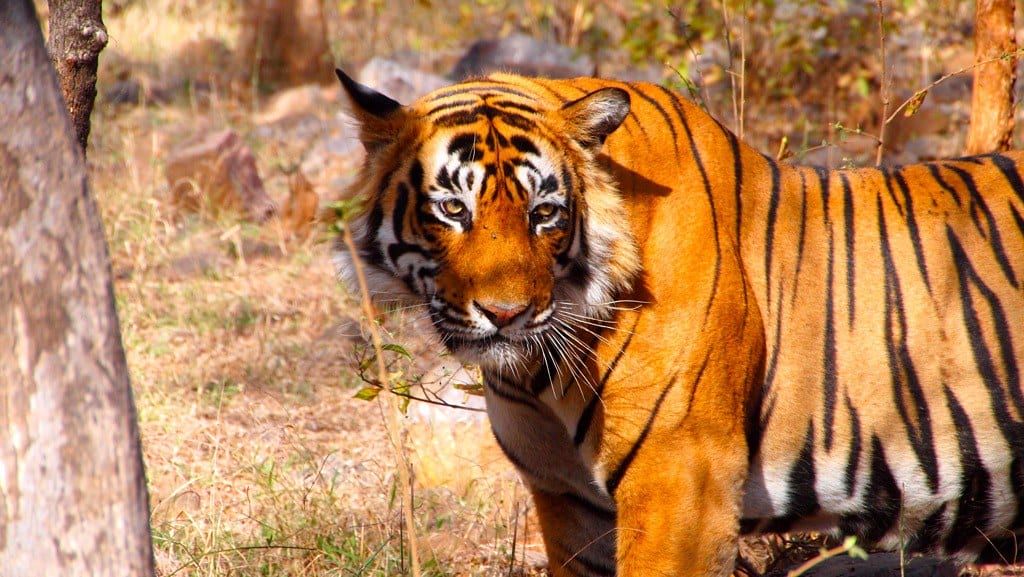
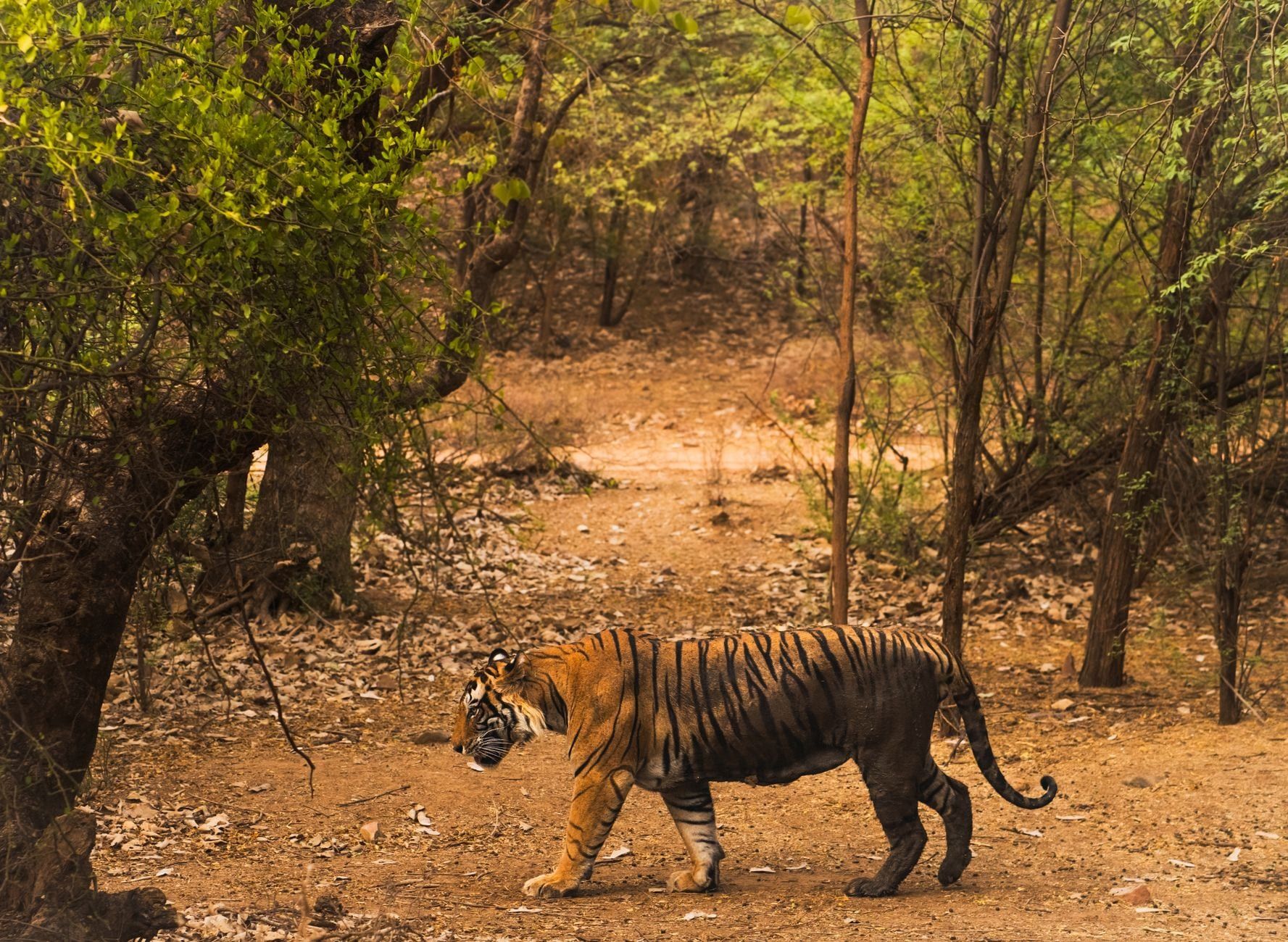
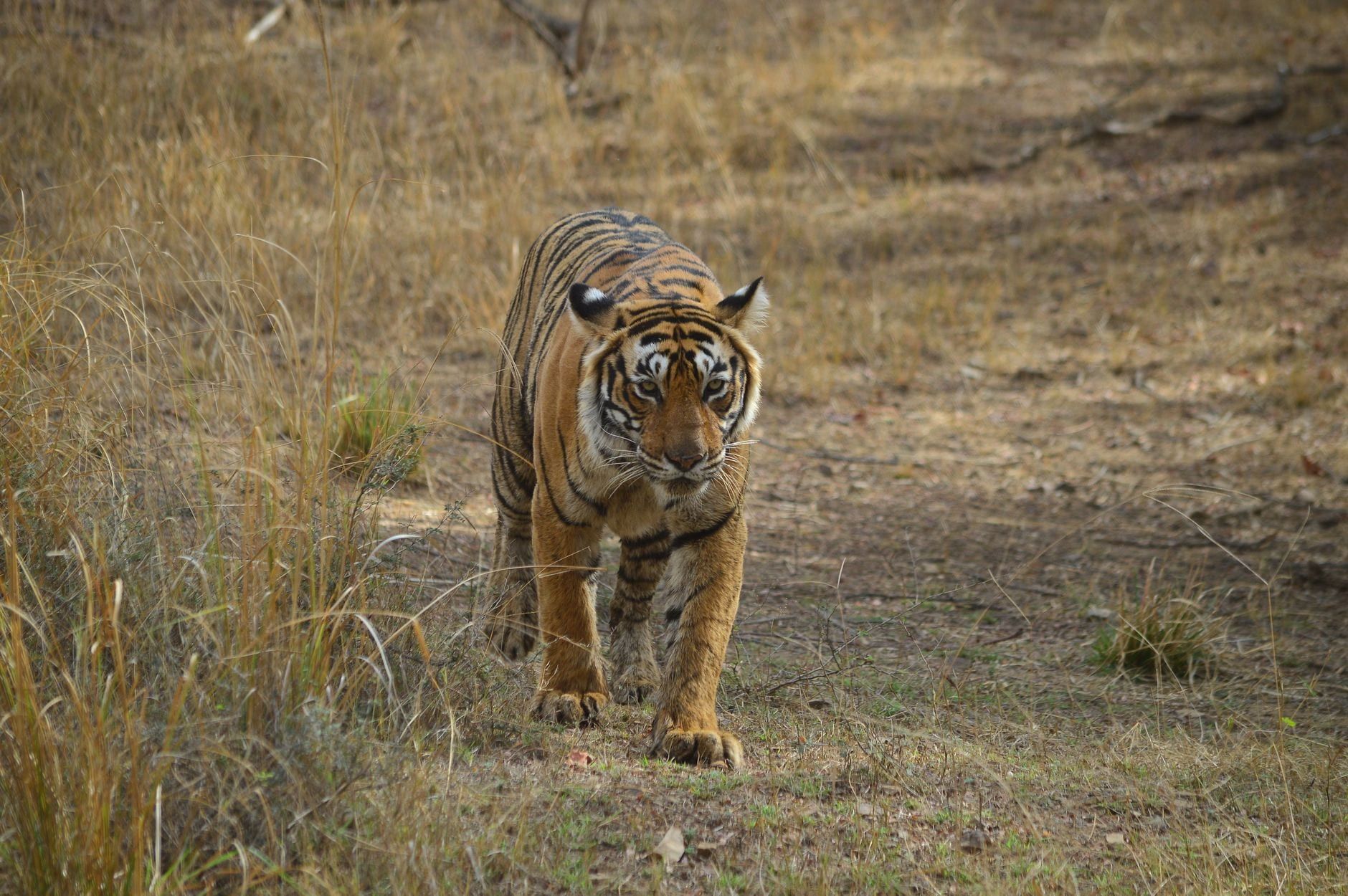
Ranthambore is the pick if a tiger sighting is the point of the trip. Its roughly 88 tigers (up from 69 in 2022) live in dry deciduous dhok forest broken by lakes, grassland and rocky outcrops, and they are famously relaxed around vehicles — lounging on tracks, drinking at Padam Talao in afternoon light, hunting sambar in the open. Most visitors who do three or four drives see at least one tiger. Single-drive visitors sometimes don't.
Corbett's ~260-plus tigers make it the largest population in India, but the animals spread across dense sal forest and tall grass where a tiger twenty meters off the track is invisible. The common Corbett experience is a morning of alarm calls — sambar barking, langurs whooping — with nothing to show for it. When a tiger does step onto a forest road there, it feels earned.
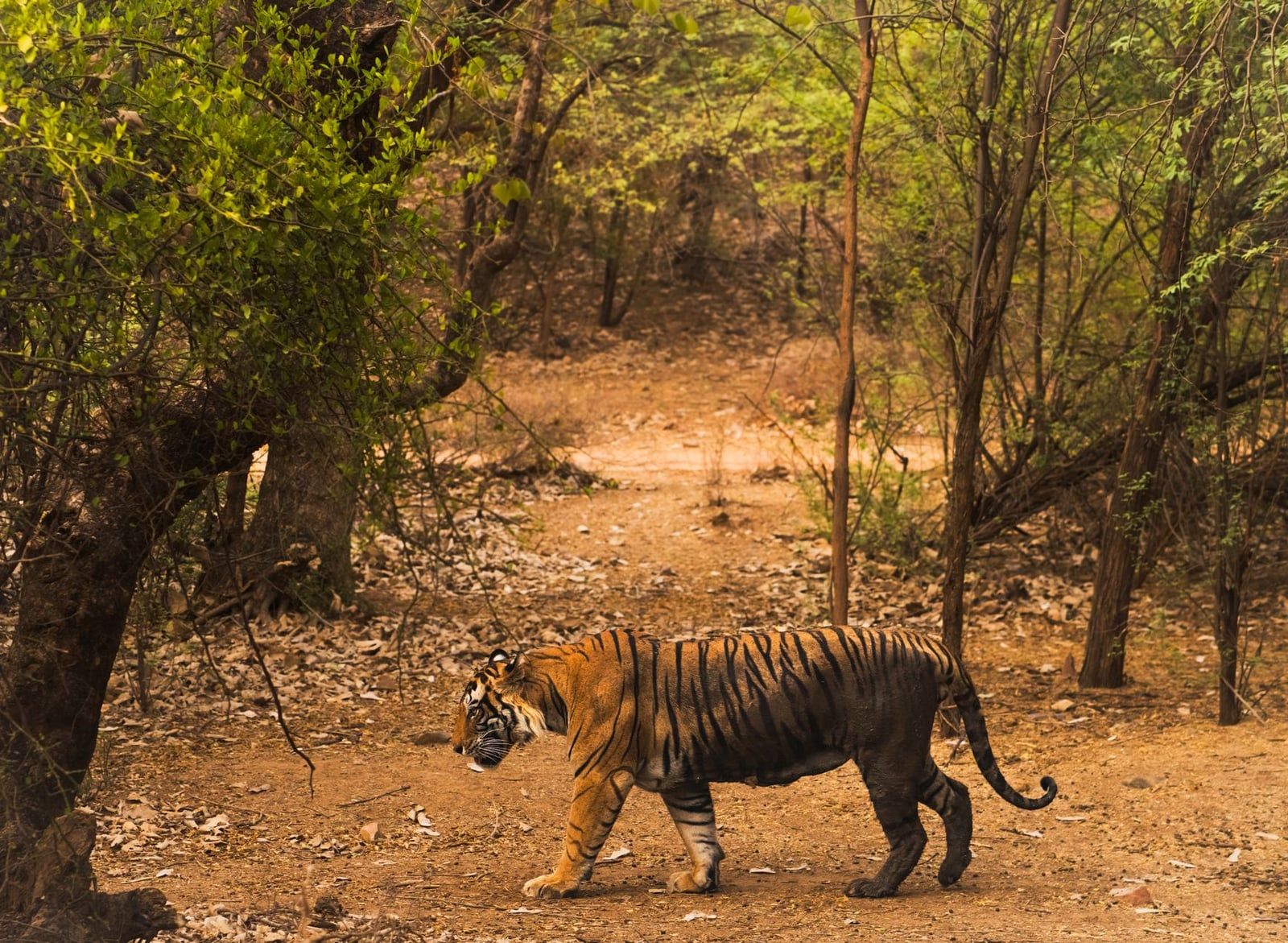
Visibility, not population, decides sightings. Two more variables shift the odds: zone allotment (Ranthambore assigns zones at check-in, and the lake zones produce the most sightings) and season, with the dry months concentrating tigers at water. Neither park guarantees anything — but a tiger safari in Ranthambore stacks the odds in your favor the way few reserves in Asia can.
Landscape & Setting: Lakes, Ruins and a Fort vs Deep Sal Forest
Beyond the cats, the two parks feel like different countries. One stages its wildlife against lakes and 10th-century stone; the other buries you in forest.
Ranthambore: a fort above the tigers
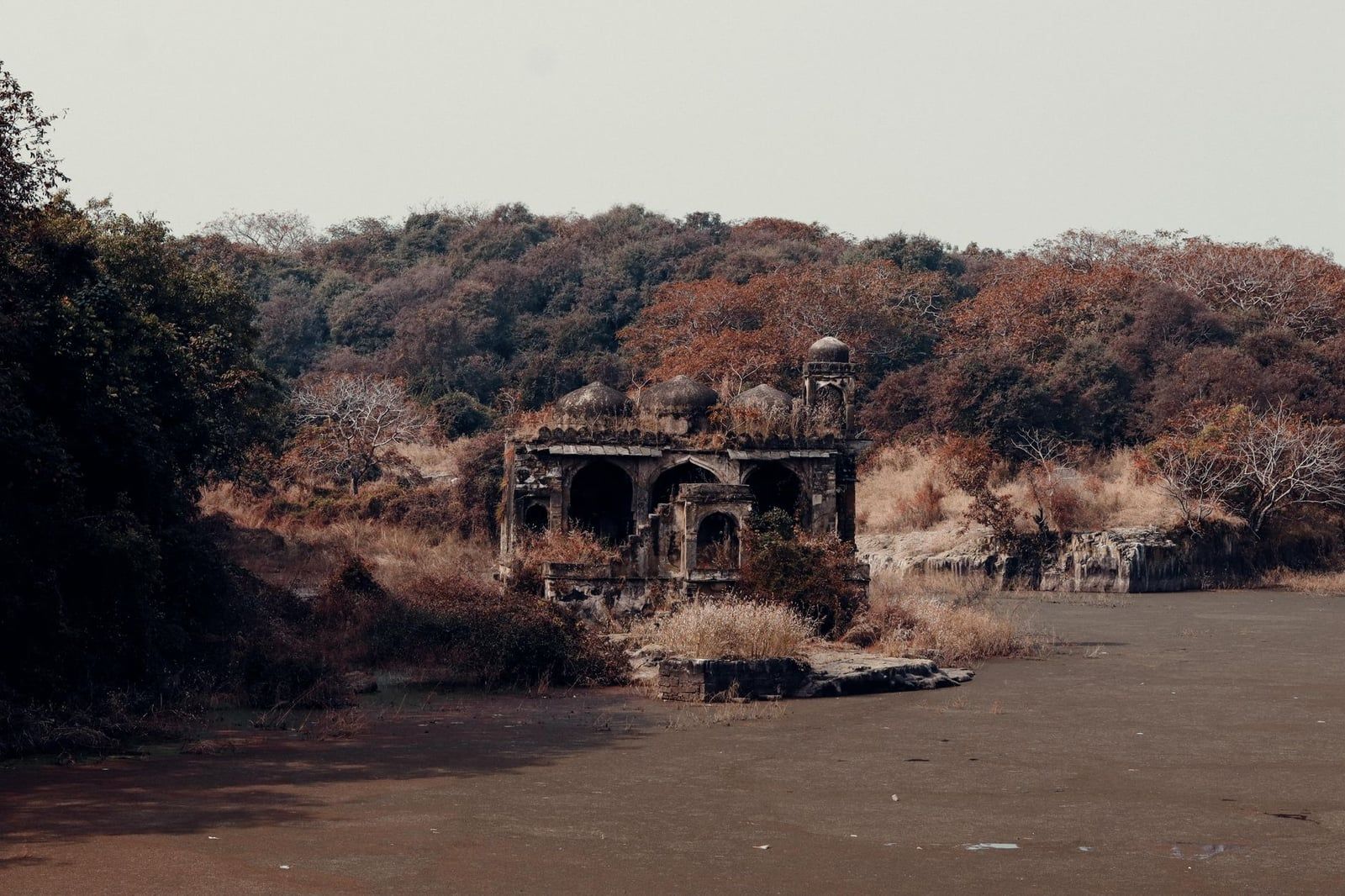
Ranthambore looks like nowhere else in Indian tiger country. A 10th-century fort rises 700 feet above the forest inside the park, inscribed by UNESCO in 2013 as part of the Hill Forts of Rajasthan — the only forest fort in that six-fort site. Below it, three lakes thread the reserve: Padam Talao edged by the red-roofed Jogi Mahal hunting lodge, Rajbagh where crumbling pavilions stand half-drowned in water, and Malik Talao. In Zone 3, tigers cross between old stones while egrets work the flooded lawns. It's the backdrop of a hundred wildlife documentaries.
Corbett: mist, rivers and sal forest
Corbett, India's first national park (established 1936, and the first Project Tiger reserve in 1973), runs on immersion rather than drama. Sal forest closes over the tracks, the Ramganga reservoir opens into the Dhikala grasslands, and winter mornings start in mist off the river. Herds of wild elephants crossing the reservoir rival any tiger sighting — and the park's atmosphere is the whole show. You can add the fort and other sights around Ranthambore between safaris; Corbett's non-safari payoff is mostly the forest itself.
Crowds and vibe
The two parks draw different tribes. Corbett's Kosi river belt — hundreds of resorts a few hours from Delhi — fills with NCR weekenders and corporate offsites; many never enter the core park at all. Sawai Madhopur, Ranthambore's dusty safari town, runs on wildlife: hotels cluster along the park road, and the whole place is up at 5 a.m. for the morning drive. If you want company that talks shutter speeds and tiger territories, that's Ranthambore.
Wildlife Beyond Tigers: Elephants and 600+ Birds vs Sloth Bears
Corbett is the biodiversity heavyweight. Wild Asian elephants — essentially absent from Ranthambore — move through in herds, gharials and mugger crocodiles bask on the Ramganga's sandbanks, otters fish the river, and the bird list tops 600 species, the strongest of any Indian park. For a birder, this isn't a contest.
Ranthambore answers with its own specialists. Sloth bears are notably common here — the rocky Kachida Valley and Anantpura tracts in Zone 4 and the buffer are the places to find them — alongside leopards on outcrops, striped hyena, nilgai and marsh crocodiles at the lakes. Its 315 recorded bird species include painted storks, crested serpent eagles and winter migrants, solid but half Corbett's tally. Our guide to Ranthambore's animals covers the full cast.
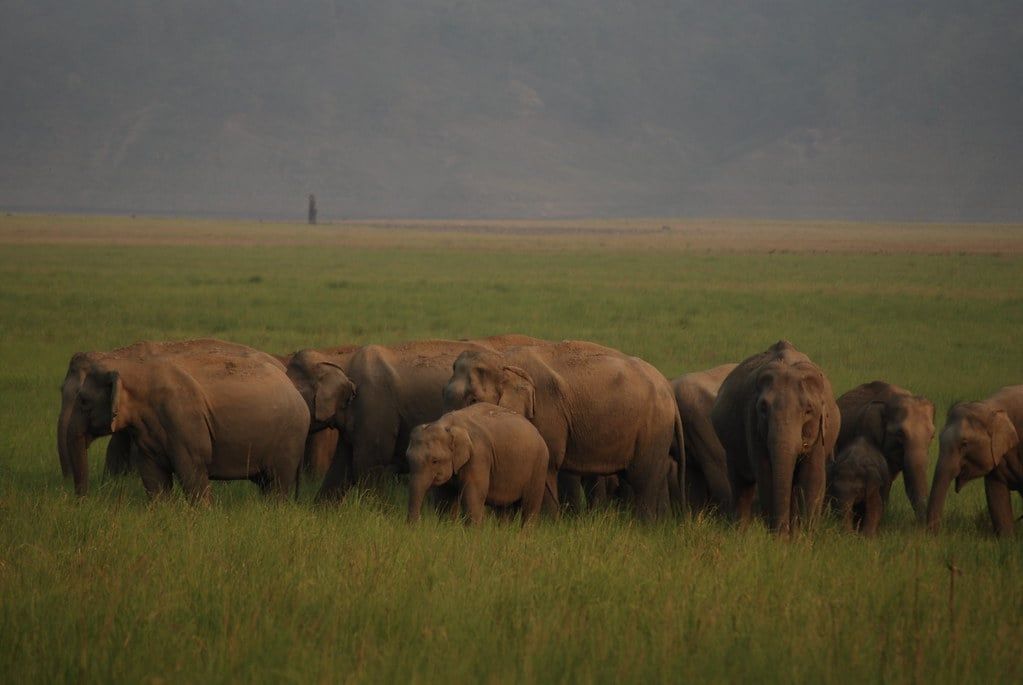
The verdict: birders and biodiversity seekers should book Corbett. First-timers chasing big cats should book Ranthambore, where the supporting cast is thinner but the headliners show up.
Safari Zones: Dhikala & Bijrani vs Ranthambore's Zones 1–10
Zones change what you actually book, and the two parks handle them differently.
Ranthambore: ten zones, two closed days
Zones 1–5 are the core, wrapped around Padam Talao, Rajbagh and Malik Talao — Zone 3 is the classic lakes-and-ruins drive and the park's most productive. Zones 6–10 are buffer, and recent sightings there have been strong enough that a buffer allotment is no longer a dud. You don't choose your zone: allotment happens at check-in unless you pay a premium-zone surcharge, and territories shift as tigers die or disperse, so any zone can deliver. The detail that ruins itineraries: Zones 1–5 shut every Wednesday and Zones 6–10 every Tuesday. If you're doing two or three drives, don't plan a Wednesday expecting the core.
Corbett: Dhikala and the overnight option
Corbett's zones split by character: Dhikala's grasslands along the Ramganga are the flagship, Bijrani holds open grassland game, Durga Devi is the birding and mahseer corner, Phato is the newer addition, and Jhirna and Dhela stay open all year. The unique selling point is the Dhikala Forest Rest House — the only place in either park where tourists sleep inside the core, waking to elephant trumpeting rather than a resort breakfast. Dhikala permits book out far ahead.
What a Safari Costs & How to Book
The pricing models are opposites, and group size decides which park is cheaper for you. Ranthambore sells seats: a shared 20-seat Canter runs about ₹1,500 per Indian national and ₹3,800–4,550 per foreigner, while a 6-seat Gypsy seat costs roughly ₹2,200–2,500 for Indians and ₹4,500–5,500 for foreigners, permit, vehicle and mandatory guide bundled in. Children under 5 ride free. Corbett sells the whole jeep — up to six people pay about ₹6,500–8,500 (Indian) or ₹12,000–15,000 (foreign) per drive. A group of six at Corbett pays less per head than a family in a Ranthambore Gypsy; a couple pays multiples more.
Booking mechanics matter as much as prices. Ranthambore permits open 90 days ahead through the official Rajasthan Forest Department portal (SSO login at sso.rajasthan.gov.in), require full prepayment and the same photo ID you'll show at the gate, and are non-refundable and non-transferable — each account is capped at six bookings a month, and third-party agent sites charge heavy markups. Since February 2026, mobile phones are banned outright during core-zone safaris, so bring a camera. Dhikala at Corbett is the permit that vanishes first; in peak season both parks need weeks of lead time.
For full trip budgets, a five-day Ranthambore stay runs roughly ₹32,000–49,000 per person against ₹40,000–60,000 at Corbett — and Corbett overshoots that range fast once you add Dhikala lodge nights or premium resorts.
Opening Seasons & Best Time to Visit
The calendars alone can pick your park. Ranthambore's core Zones 1–5 run from 1 October to 30 June and shut for the monsoon; Corbett's Dhikala opens only on 15 November and closes 15 June, Bijrani closes for the monsoon, and just Jhirna and Dhela run year-round. So for any trip between 1 October and 15 November, Ranthambore is the only one of the two offering a core-zone safari. Travel dates, not preference, make the decision.
For sightings, March to June is the peak in both parks: the forest dries out, tigers concentrate at the shrinking water holes, and visibility through thinning grass improves. The cost is heat — Ranthambore afternoons regularly cross 40°C, sometimes 43°C, so take the earliest morning drive and carry two litres of water. November to February is the comfort season: post-monsoon green, cool mornings (near freezing in an open vehicle in December and January, with fog that can kill a morning drive), wintering birds and thinner crowds. Our month-by-month best time to visit Ranthambore guide has the full breakdown.
Getting There: Delhi, Jaipur and Onward
Corbett is the Delhi-NCR weekend machine. Ramnagar station, roughly 12 km from the park gates, has direct trains from Delhi and the road drive takes five to six hours — close enough that half the resort belt exists purely for Saturday arrivals. It also stacks neatly with Nainital and Kumaon if you're extending.
Ranthambore is the rail traveler's park. Sawai Madhopur station, 10–14 km from the gates, sits on the Delhi–Mumbai trunk line with more than twenty daily trains — 3.5 to 6 hours from Delhi, 2 to 3 from Jaipur — and Jaipur is only about 180 km away by road or a short trip from Jaipur. That's the real tiebreaker: Ranthambore bolts onto a Jaipur–Agra Golden Triangle circuit, with the Vande Bharat from Agra halting at Sawai Madhopur, while Corbett is a stand-alone mountain-foothills escape. Full transport options are in our directions guide.
The Verdict: Choose Ranthambore If… / Choose Corbett If…
Choose Ranthambore if any of these is you:
- It's your first tiger safari and sightings are the point
- You're traveling as a couple or solo (per-seat pricing wins)
- Your dates fall between 1 October and 15 November
- You want tigers against lakes and ruins — the photography shot
- You're combining the trip with Jaipur or Agra
Choose Corbett if this sounds like your trip:
- Birding and biodiversity come first (600+ species, gharials, otters)
- Wild elephants are on your list — Ranthambore can't offer them
- You want a Dhikala overnight inside the core forest
- You're a group of five or six sharing jeep costs
- Delhi-NCR logistics make it the obvious long weekend
Photographers should split by goal: Ranthambore for clean, full-body tiger portraits in open light; Corbett for atmospheric frames — mist, river crossings, elephants, forest interiors. And if the calendar and budget allow, do both. They're complementary rather than competing, and most serious wildlife travelers in India end up ticking each off in time.
FAQs
Which is better for a first tiger safari — Corbett or Ranthambore?
Ranthambore, for most first-timers. Open dry forest, lakes that concentrate wildlife, and tigers habituated to vehicles make sightings far more likely, and per-seat pricing keeps the trip affordable. Corbett suits travelers who care about the whole forest, not just its apex predator.
Which park has more tigers?
Corbett, by a wide margin — roughly 260-plus tigers, the highest population in India, spread over about 1,288 sq km of dense forest. Ranthambore holds around 88 tigers in about 1,334 sq km, but its open terrain means you're far more likely to actually see one.
What is the best month for tiger sightings in both parks?
March to June. Water sources shrink, tigers and prey gather at what remains, and dry grass opens sightlines — the lakes of Padam Talao, Rajbagh and Malik Talao are Ranthambore's hotspots. Expect daytime temperatures above 40°C in Ranthambore.
How much does a safari cost in each park?
Ranthambore sells per seat: roughly ₹1,500 by Canter and ₹2,200–2,500 by Gypsy for Indians, about ₹3,800–5,500 for foreigners. Corbett prices the whole jeep at roughly ₹6,500–8,500 for Indians and ₹12,000–15,000 for foreigners, so your per-head cost depends heavily on how many people share the vehicle.
Which is easier to reach from Delhi?
Corbett — Ramnagar is about 12 km from the gates, roughly five to six hours by road with direct trains. Ranthambore needs the train to Sawai Madhopur, 10–14 km from the park, taking 3.5 to 6 hours from Delhi on the Mumbai trunk line.
Can you stay overnight inside the parks?
Yes at Corbett: the Dhikala Forest Rest House is the only overnight option inside either park's core area. Ranthambore has no core-zone night stays; visitors lodge in Sawai Madhopur and drive in for each safari.
Are there elephants in Ranthambore?
Essentially no wild elephants — that's Corbett's signature sighting. Ranthambore compensates with frequently seen sloth bears, leopards, striped hyena and its fort-and-lakes setting.
Which park is better for wildlife photography?
Ranthambore for tiger portraits: open terrain and good light give unobstructed frames. Corbett for storytelling images — misty sal forest, river crossings, elephants and birds — at the cost of lower visibility on any single drive.