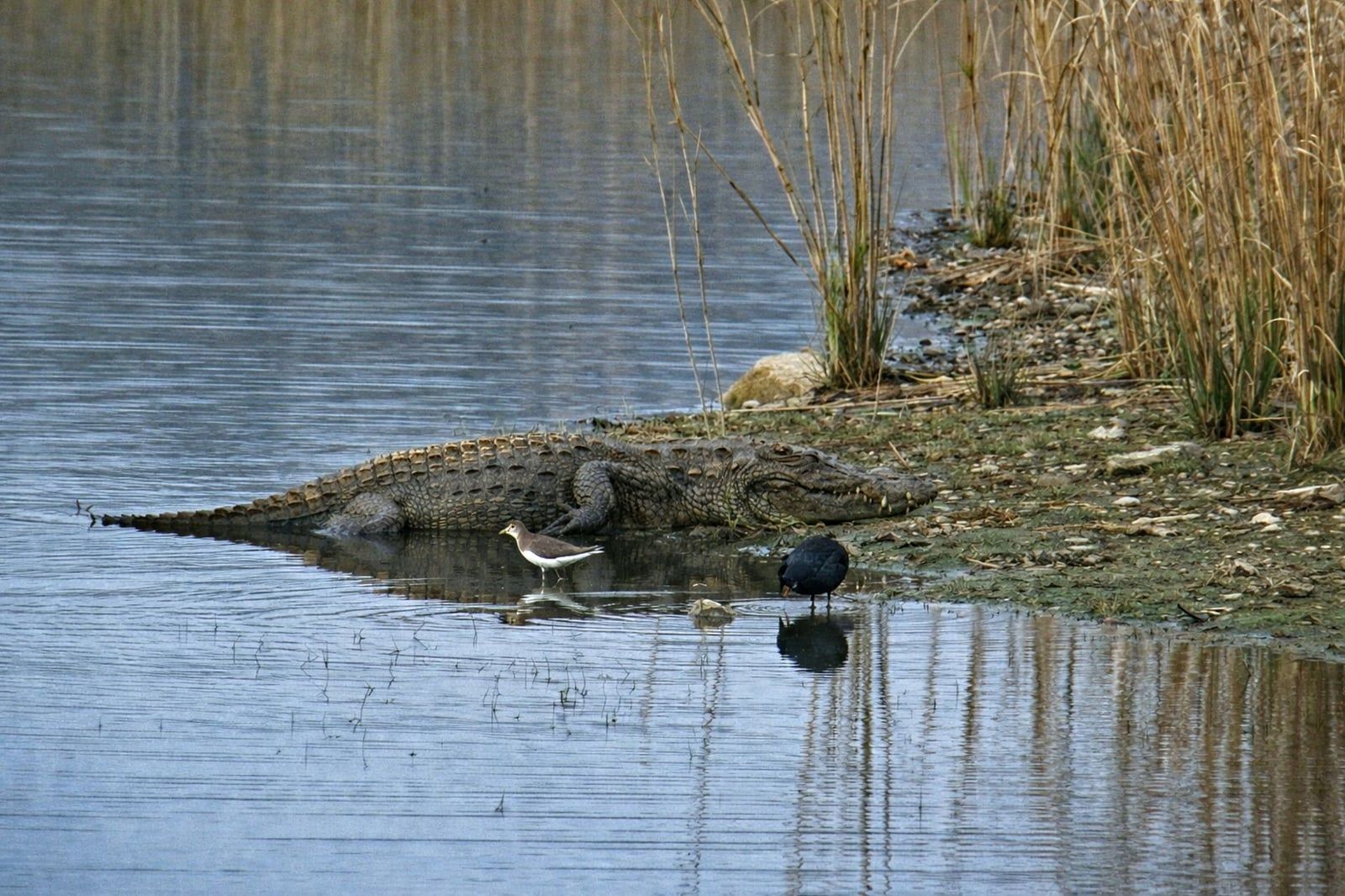
Tigers made Ranthambore famous, and rightly so: this dry, ruined corner of Rajasthan is among the best places on earth to watch a wild Bengal tiger in daylight. But the park records 38 mammal species and 315 birds, and most of any given safari is spent with the rest of the cast — sambar wading chest-deep at dawn, langurs brawling on fort walls, a mugger crocodile lying flat as a log on a lake bank.
The reserve sprawls across 1,411 sq km of hill country at the junction of the Aravalli and Vindhya ranges, 180 km southeast of Jaipur and an easy add-on on trips from Jaipur. A 10th-century fort rises 700 ft above the canopy inside it. This guide covers what actually lives here, what you're realistically going to see, and how to time and place your drives to see more of it — for the wider picture, start with our things to do in Ranthambore guide.
Wildlife of Ranthambore at a Glance
The National Tiger Conservation Authority's reserve brief credits Ranthambore with 38 mammal species, 315 bird species and 11 reptile species, alongside more than 300 kinds of trees in its dhok-dominated dry deciduous forest. Tigers move freely across the whole 1,411 sq km tiger reserve, which folds in the Kailadevi and Sawai Man Singh sanctuaries beyond the national park itself. Tourists, though, are confined to 10 numbered safari zones: zones 1-5 in the core and zones 6-10 in the buffer.
Here's what two or three drives typically deliver, in honesty tiers:
- Near-certain: chital, sambar, Hanuman langurs, wild boar, peafowl
- Likely: nilgai, mugger crocodile, golden jackal
- Lucky: a tiger on your first drive, leopard, sloth bear
- Very lucky: striped hyena, caracal, rusty-spotted cat
One cleanup for the search bar: there are no elephants, lions or cheetahs in Ranthambore. The park's big draw is the tiger, backed by leopards, sloth bears and marsh crocodiles. If a package promises elephant-back safaris here, it's selling something the park doesn't do — all viewing is from 6-seat Gypsy jeeps or 20-seat canters. Our wildlife safari guide covers how those drives are booked and run.
Bengal Tigers: Ranthambore's Star Animals
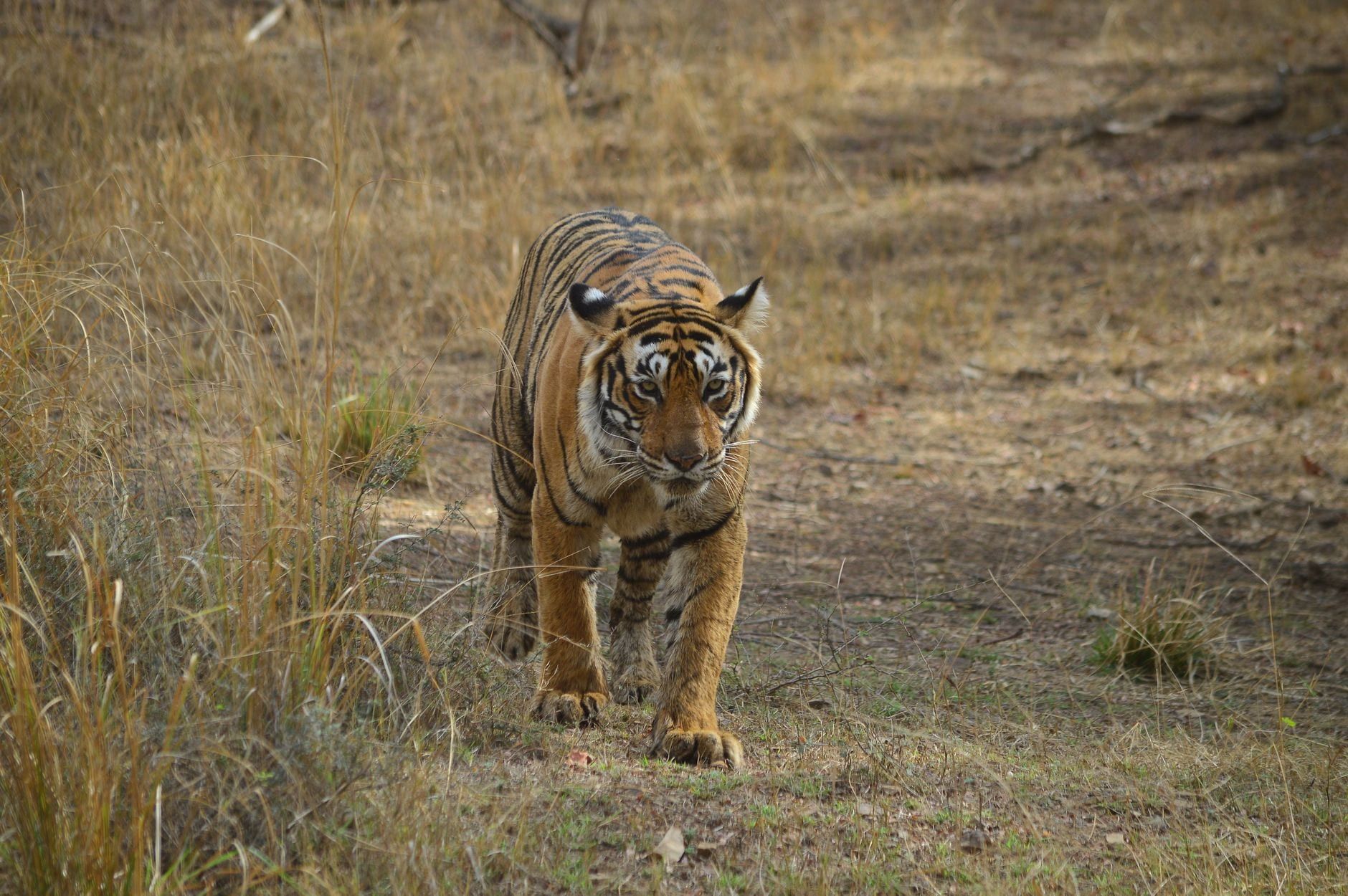
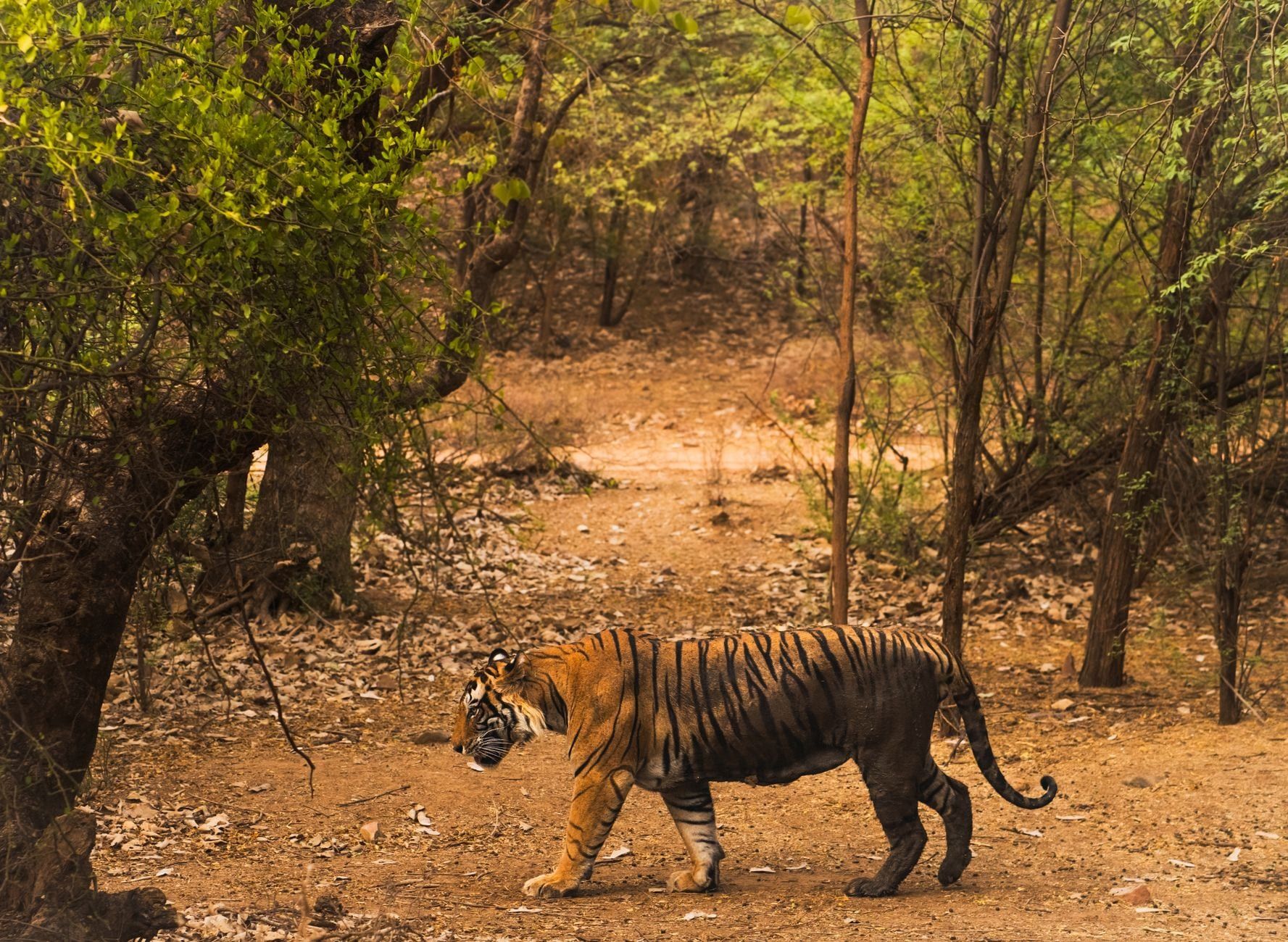
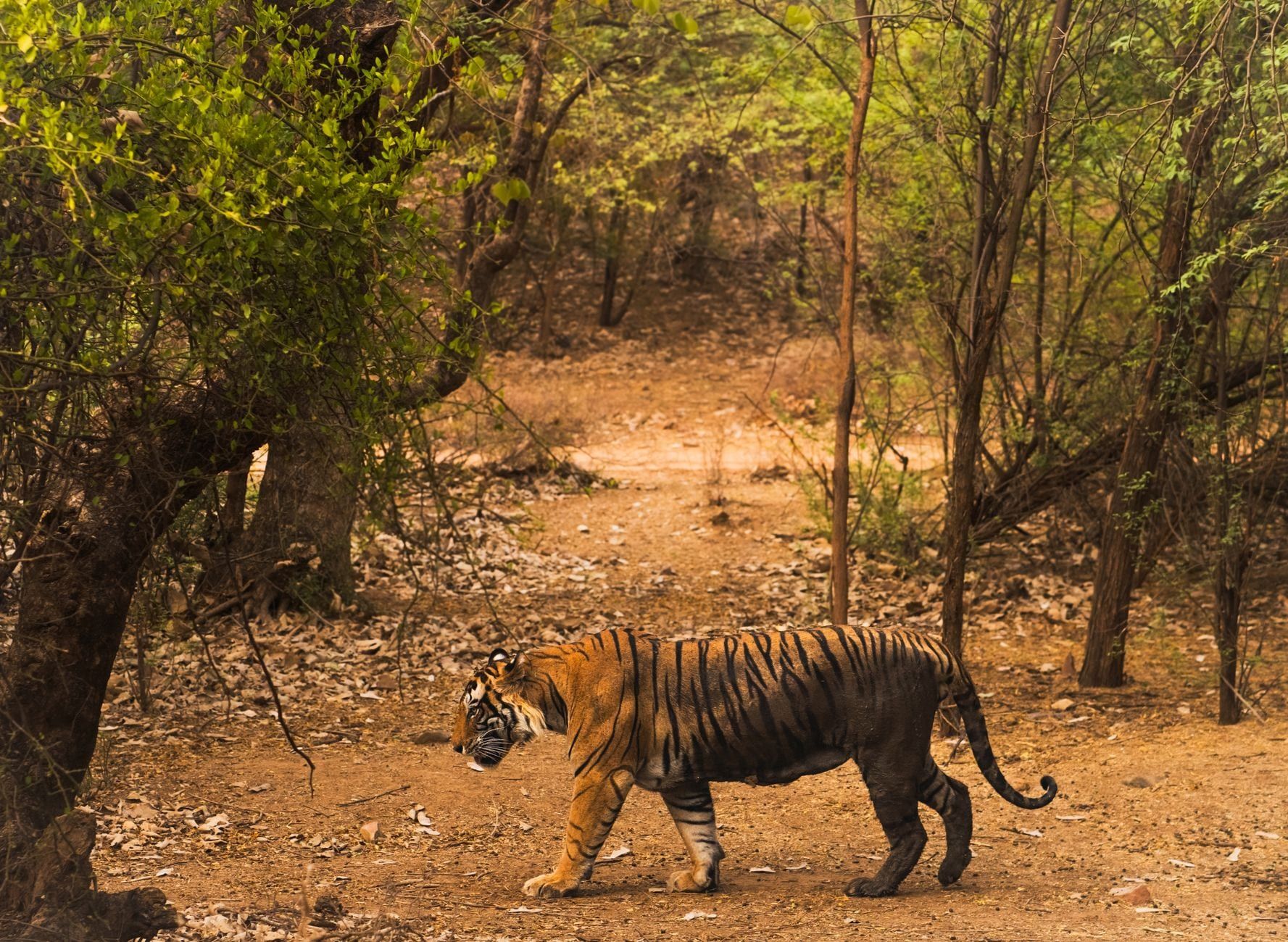
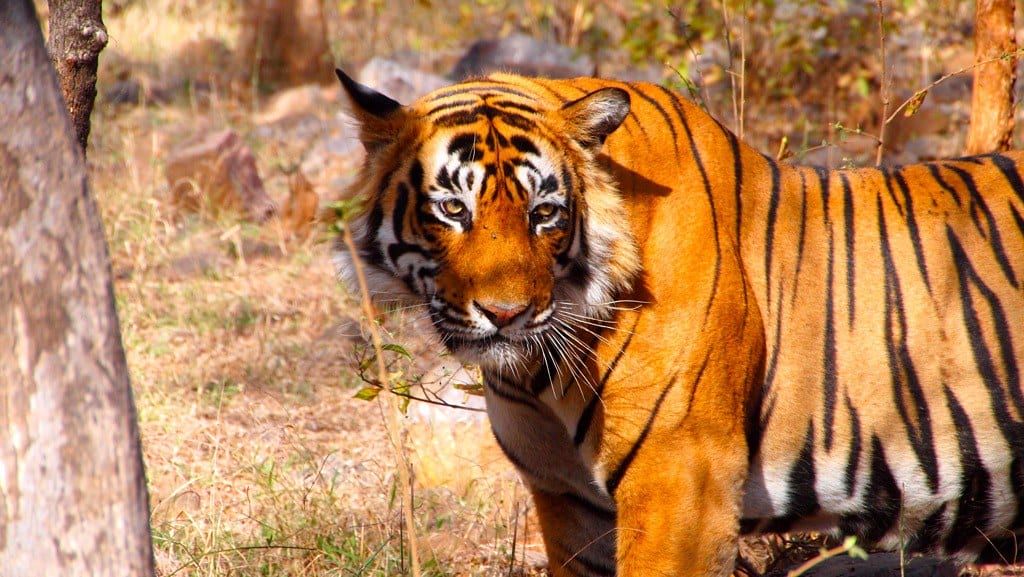
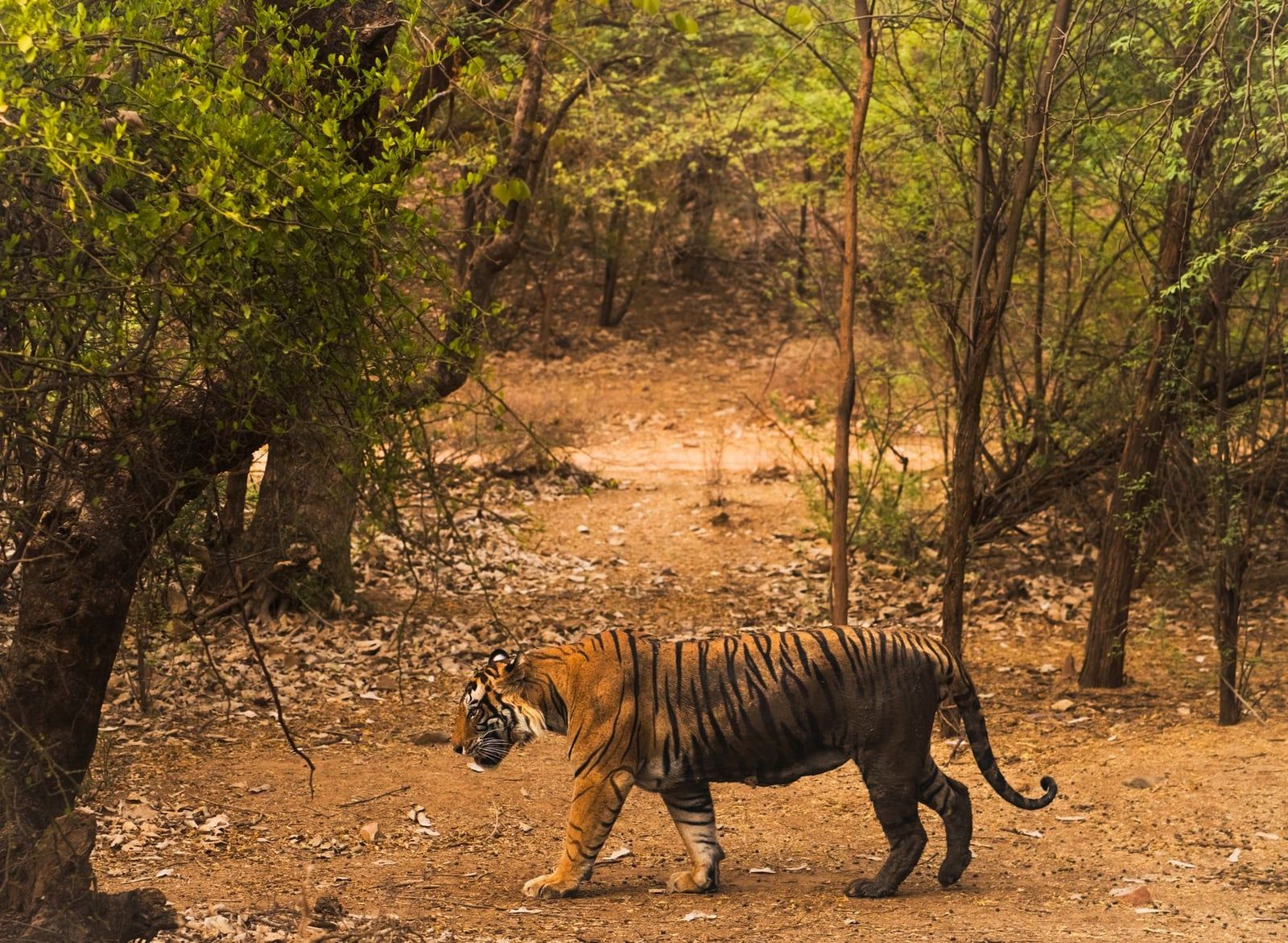
Ranthambore is one of India's flagship Project Tiger reserves, and after a near-collapse two decades ago it now carries roughly 88 tigers that behave, for wild animals, almost recklessly calmly around vehicles. That combination — numbers plus daytime habituation in open forest — is why tiger watchers put it at the top of the list.
Why Ranthambore's tigers are easy to watch
Two things make this park exceptional for tiger watching, and neither is luck. First, the tigers here grew up around vehicles and ignore them: they lounge on the tracks, hunt sambar in broad daylight, and drink at the lakes while a queue of jeeps idles 50 metres off. Second, the habitat is open — dry deciduous dhok forest that thins out as the season dries, with big lakes and grassy meadows doing the work of a stadium. Photographers get cleaner sightlines here than in almost any other Indian reserve.
The numbers: from about 15 to roughly 88
Ranthambore was a maharaja's hunting ground before becoming one of Project Tiger's founding reserves in 1973. Poaching then collapsed the population to roughly 15 animals in the early 2000s. Strict protection turned it around: the NTCA's 2022 census counted 69 tigers, and forest-department reporting put the figure near 88 by 2024-25. It has since served as a source population, seeding tigers into Rajasthan's other reserves.
Machli's long shadow
Every guide of a certain age will mention Machli, the 'Lady of the Lake' and the most photographed tigress in the world, who ruled the Padam Talao and Rajbagh country that is now Zone 4 until her death in 2016. Today's cats carry T-numbers and their territories are common knowledge among guides, which is why your driver takes a call from another vehicle and suddenly everyone converges on one water hole.
The honest odds: most visitors who do 3-4 drives see at least one tiger, single-drive visitors sometimes don't. Wild animals are wild animals. The sighting peak runs March to May, when heat and thin cover pull both tigers and prey to the water.
Other Predators: Leopards, Sloth Bears and Smaller Carnivores
Five wild cat species live here — tiger, leopard, caracal, jungle cat and rusty-spotted cat — and beyond the big one, every other predator in the park is a dusk-to-darkness specialist. That shapes how you hunt for them: early gate times, quiet zones and honest expectations.
Leopard
The leopard is the second-biggest cat in the park and the harder one to see. It prefers the rocky outcrops and hilly forest edges that tigers use less — the Kachida Valley and Anantpura-Bhakola tracts of Zone 4, plus the hillier buffer — and is mostly a dusk-and-darkness animal. Early-morning drives in those quieter zones are the ones that produce a leopard draped across a boulder. Expect it to be harder-won than any tiger sighting.
Sloth bear
Long shaggy black coat, pale chest patch, a snout built for hoovering termites — a sloth bear is unmistakable if you get one. They dig for termites and raid honey in the early mornings and evenings, mostly in rocky forest, and Zone 4 is their best address. Encounters tend to be brief and at distance. Treat one as a bonus, not a plan.
Striped hyena and golden jackal
The striped hyena is a nocturnal scavenger with a distinctive sloping back, and your best window is the first or last light of a drive. Jackals, by contrast, are everywhere — adaptable little hunter-scavengers seen alone or in pairs on the tracks, often near kills and water. Spotting a jackal is routine; spotting a hyena earns bragging rights back at the lodge.
The near-miss cats and the fox
Three more cats complete the roster: the caracal, a tufted-eared desert cat of the open scrub; the jungle cat, lanky and plain-coated, seen crossing clearings; and the rusty-spotted cat, small enough to sit in two cupped hands. All three are genuine rarities here — the 'very lucky' tier — and the Indian fox of the open scrubland is scarcely easier. Locals who've driven these tracks for a decade count caracals on one hand.
Deer, Antelope and Other Herbivores
This is the cast you will definitely meet: deer, antelope, boar and two kinds of monkey, plus the night-shift small mammals most visitors never clock. They're also the tiger's support system — the prey base and the alarm network that makes finding predators possible at all.
Sambar
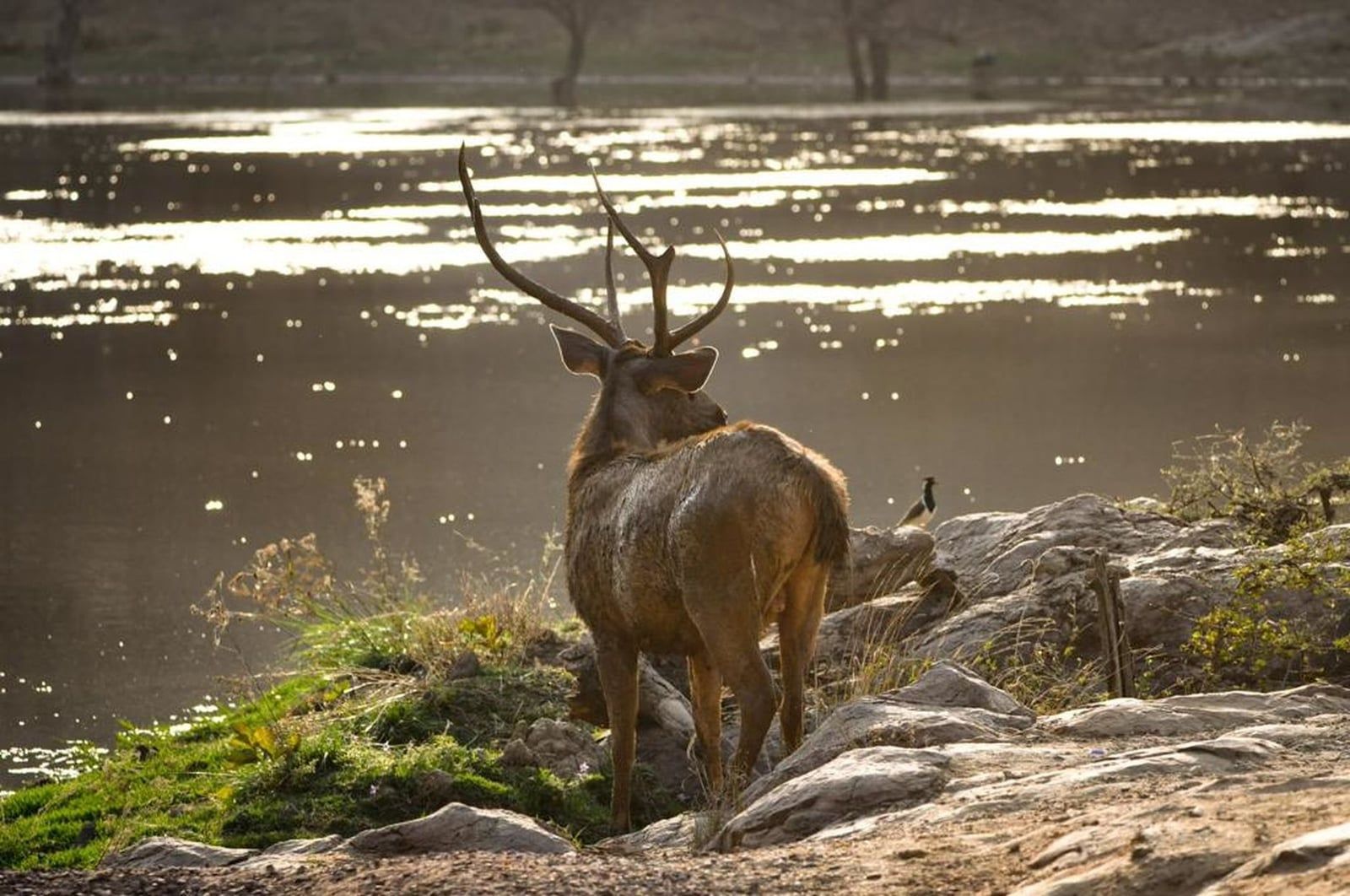
India's largest deer, and the tiger's favourite meal: dark shaggy coat, heavy antlers, and a habit of standing chest-deep in lakes at dusk. Sambars are the animals your guide is really hunting when the light drops, because where sambar drinks, tigers wait. Their alarm call — a deep, resonant bark — is the loudest thing in the forest.
Chital
The spotted deer will fill your camera roll whether you like it or not. Chital are the park's most common large mammal, moving in big mixed herds through the meadows, white-spotted coats making them visible at extraordinary distance. Their sharp, repetitive alarm bark is the guide's radar — more on that in the tips below.
Nilgai, chinkara and wild boar
The nilgai, or blue bull, is Asia's largest antelope, and the name fits: adult males are a dusty blue-grey, standing horse-tall in the open grasslands and buffer fields. The chinkara, a slighter and faster gazelle, shares the open country and the buffer zones. Wild boar are everywhere — tusked, bristly, rooting near water and clearings, usually seen trotting away in single file.
Langurs, macaques and the night shift
Hanuman langurs, grey with black faces, patrol the fort walls and gateways in boisterous troops; rhesus macaques work the safari-route trees closer to town. Both monkeys bark predators into view, and the langurs' position high in the canopy makes them the park's best early-warning system. The smaller mammals — Indian porcupine, rufous-tailed hare, mongooses, the palm civet — are dawn, dusk and night creatures, so most visitors meet them as eye-shine or not at all.
Reptiles, Birds and the Lakes
More than a dozen lakes and streams thread the reserve, and they do double duty: they're where the big reptiles live, and where birding happens. In late season they're also where everything else in the park comes to drink, which makes the lake margins the most productive real estate on any drive.
Mugger crocodiles
The mugger, or marsh crocodile, is the easiest big-animal sighting in the park. Baskers line the banks of Padam Talao, Rajbagh Lake and Malik Talao, motionless through the midday heat, and the bigger specimens pass for logs until a heron lands on one. On a summer afternoon, when everything else has melted into shade, the crocodiles are still working the shallows — and tigers come to the same banks to drink.
Pythons, monitors and the rest
The wider reptile list runs from the Indian rock python — sometimes seen sprawled across a warm track — to desert monitor lizards, cobras, kraits, Russell's vipers and saw-scaled vipers, plus softshell and flapshell turtles in the lakes. Give every snake a wide berth and let the guide make the identification; that rule costs nothing and has kept this park's record clean.
Peafowl and the birdlist
With 315 recorded species, Ranthambore rewards birders between tiger stops. Indian peafowl are absurdly abundant, and the males fan their trains in the monsoon and on early mornings — a display that stops whole canters. Watch bare trees for crested serpent eagles and hawk-eagles, lake margins for painted storks and bronzed-winged jacanas, and listen for the great horned owl duets at dusk. Sarus cranes, painted spurfowl, kingfishers, nightjars and paradise flycatchers round out the marquee names, and November to February adds winter migrants to the lake shallows. The lakes — Padam Talao and Malik Talao above all — are where a birding morning happens.
When to See Ranthambore's Animals: Season and Time of Day
The park opens 1 October and closes 30 June, and each stretch of that season suits a different animal agenda. The short version:
| Months | Conditions | What it means for sightings |
|---|---|---|
| March-May | Hot, 35-43°C, thin dry cover | Peak viewing: tigers and prey crowd the lakes and water holes |
| October-November | Post-monsoon green, mild | Active tigers but thick cover; fresh, green photography |
| December-February | Cool to near-freezing mornings, fog | Best birding with winter migrants; tigers harder to find |
| July-September | Monsoon | Core zones 1-5 shut; buffer zones 6-10 only, weather permitting |
The trade-off is simple. October to February is the comfortable visit — green forest, wintering birds, mild afternoons — but food and water are everywhere, so animals scatter and the cover hides them. From March the forest opens up and shrinking water forces the wildlife into a handful of spots. April and May are brutally hot on an open vehicle, yet they deliver the highest sighting rates of the year. If tigers are the point, take the heat; if a family trip is the point, take November. Our best time to visit Ranthambore guide works through this in detail.
Day by day, two 3.5-hour shifts run morning and afternoon, with gate times set by season: roughly 6:30-10:00am and 2:30-6:00pm in the cooler months, shifting to 6:00-9:30am and 3:00-6:30pm from April. Predators belong to the first and last light, so the first hour of a morning drive is gold. Crocodiles bask through the midday gap, deer and langurs feed all day, and on hot afternoons tigers walk down to Padam Talao and Rajbagh to drink. One scheduling trap: zones 1-5 close every Wednesday and zones 6-10 every Tuesday, so check the rotation when stacking back-to-back dates.
Where to Look: Animals by Safari Zone
Zones are the detail that decides your safari: the core holds the lakes and the tiger density, the buffer trades scenery for space and leopards. Knowing which animal lives where lets you make peace with whatever zone the permit gods hand you.
Zones 1-5: the core
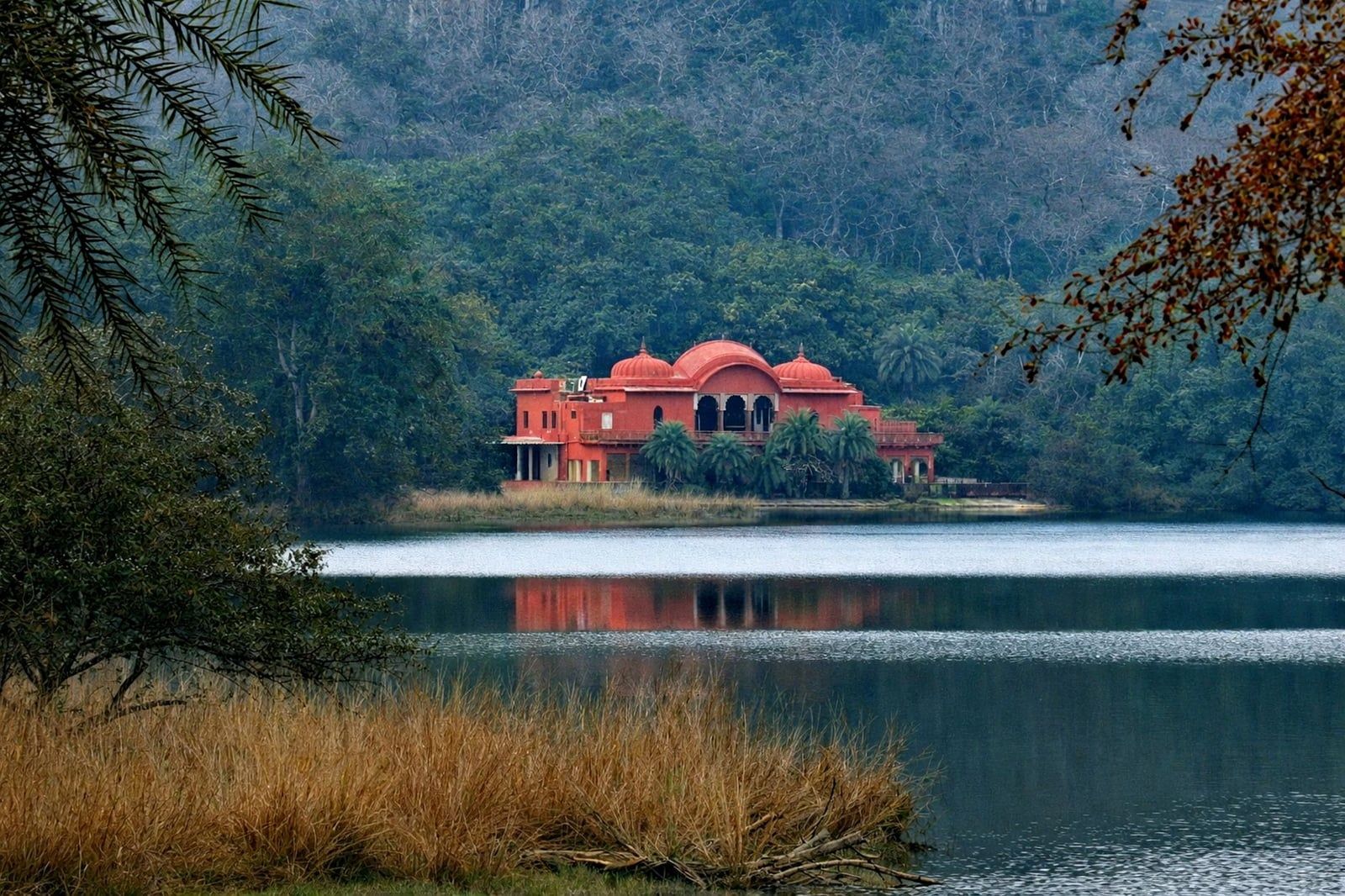
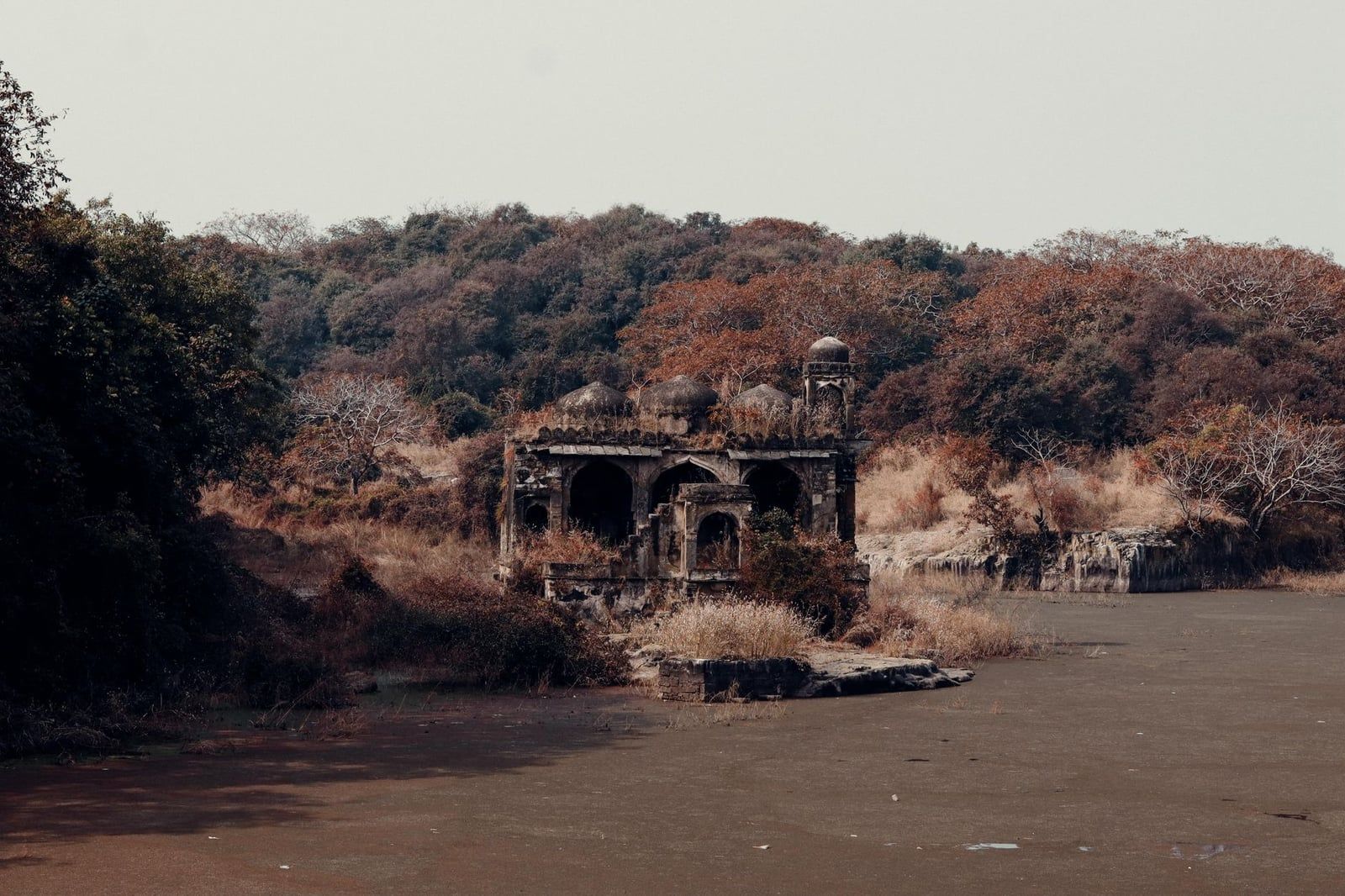
The core holds the lakes, the ruins and the highest tiger density, and it's where most of the park's famous imagery comes from. Zone 3 is the classic — Padam Talao with the red-roofed Jogi Mahal at its edge, plus the Rajbagh complex, where crumbling pavilions and arches stand half-drowned in the lake and tigers cross between the old stones. Zone 2 is studded with water holes and turns up varied game, leopards included. Zone 4's rocky Kachida Valley is the leopard-and-sloth-bear zone and was Machli's old kingdom. Zone 5 is the quieter end, sharing tiger movement with its neighbours on meadow tracks that see fewer vehicles.
Zones 6-10: the buffer
The buffer zones are hillier, emptier of vehicles, and better than their reputation suggests — leopards in particular do well on the rocky ridges. They're also the only zones running through the monsoon, weather permitting, and the adjoining Kailadevi sanctuary adds wilder drives through village-relocation grasslands. If you draw a high-numbered zone, don't sulk: fewer jeeps and open terrain have rescued many a trip.
So which zone should you hope for? Zone 3 if you want the postcard combination of tiger, lake and ruins; zone 4 for leopards and bears; zone 2 for water-hole odds. But zones are allotted at check-in, and unless you pay a premium-zone surcharge you take what the system gives you. The only reliable strategy is multiple drives — four safaris across two days will usually sample two or three different zones. Anyone promising a 'guaranteed tiger zone' at booking is selling snake oil.
Safari Tips for Seeing More Animals
Between vehicle choice, drive count and one free skill — reading alarm calls — the difference between a thin safari and a full one is mostly decisions you make before the gate opens.
The single best skill costs nothing: reading the forest's alarm system. When a chital barks, langurs cough from the canopy, or a sambar lets off that deep bark, a predator is moving — and your guide is triangulating direction and distance from two or three such calls. Stay quiet when it happens, watch the deer's eyeline rather than the deer, and keep scanning the direction they're staring into. Some of Ranthambore's best tiger sightings began with a single bark from a herd nobody would otherwise have noticed.
| Gypsy jeep (6 seats) | Open canter (20 seats) | |
|---|---|---|
| Seats | 6, open 4x4, everyone close to the guide | 20 on tiered benches |
| Ride and handling | Nimble, faster between sightings | Slower, rougher on the tracks |
| Shared seat, Indian national | INR 2,200-2,500 | About INR 1,500 |
| Shared seat, foreign national | INR 4,500-5,500 | INR 3,800-4,550 |
| Best for | Photographers, repeat visitors, families | First-timers and tighter budgets |
Both vehicles carry the mandatory guide and cover the same zones, and the canter's height actually helps for spotting over scrub. Whichever you book, book more than one drive: two is the sensible minimum, 3-4 across two days is the realistic number for a good tiger chance, and regulars chasing cats do five. Book and shift-and-zone-spread your tiger safari drives early — Gypsies and core zones sell out weeks ahead in high season.
Kit and conduct, briefly. Bring binoculars and a zoom lens; wear khaki, olive or brown rather than bright colours; pack fleece, cap and gloves for winter mornings that touch near zero on a moving open vehicle, and two litres of water plus a dust scarf for April afternoons. Since 1 February 2026, mobile phones are banned outright in the core zones — no calls, photos or video — so a standalone camera is the only way to shoot. Inside the park, stay seated, keep quiet near sightings, never feed or bait anything, and don't press the driver to leave the allotted zone; the Wildlife Protection Act makes violations punishable, and the guide stays aboard for good reason.
FAQs: Ranthambore National Park Animals
What animals can you see in Ranthambore National Park?
Around 38 mammal species live here, including the Bengal tiger, leopard, sloth bear, striped hyena, golden jackal, sambar, chital, nilgai, wild boar, Hanuman langur and rhesus macaque, plus 11 reptile species led by the mugger crocodile and some 315 birds. On a typical two-to-three-drive visit you'll certainly see deer, monkeys, boar, peafowl and crocodiles — tigers take luck, leopards more.
How many tigers are in Ranthambore and what are the chances of seeing one?
The NTCA's 2022 census counted 69 tigers; forest-department reporting put the population near 88 by 2024-25. Because the tigers are habituated to vehicles and active in daylight, it's one of India's most reliable parks — but book at least two drives, ideally in core zones 1-5, for a realistic chance.
Which safari zone is best for seeing animals in Ranthambore?
Zones 1-5 form the core with the highest tiger density. Zone 3 (Padam Talao, Jogi Mahal and the Rajbagh ruins) is the most celebrated; zone 2 has the water holes; zone 4 is the best bet for leopards and sloth bears. Zones are allotted at check-in, so no booking can guarantee any zone.
What is the best time of year and day to see animals in Ranthambore?
The season runs 1 October to 30 June. March-May gives the highest sighting rates as animals crowd the remaining water; October-February is greener, milder and best for birds but tigers hide more easily. Drives run in two daily 3.5-hour shifts, roughly 6:30-10:00am and 2:30-6:00pm, shifting earlier and later in summer. Zones 1-5 close for the monsoon from 1 July to 30 September.
Are there elephants or lions in Ranthambore?
No. Ranthambore has no elephants, lions or cheetahs. The tiger is the headline predator, supported by leopards, sloth bears, striped hyenas and marsh crocodiles, and all wildlife viewing happens from jeeps or canters rather than elephant-back.
How many safaris do you need to see a tiger in Ranthambore?
Each drive lasts 3.5 hours across two daily shifts. Most visitors who do three or four drives see at least one tiger; a single-drive visitor may not. Regulars recommend 4-5 safaris to maximise the odds — and even then, sightings are never guaranteed on any individual drive.
What birds can I see in Ranthambore National Park?
Some 315 species are recorded, including Indian peafowl, crested serpent eagles, painted storks, sarus cranes, painted spurfowl, bronzed-winged jacanas, kingfishers, nightjars and great horned owls. November to February adds winter migrants, and the lake margins — Padam Talao and Malik Talao especially — are the top birding spots.