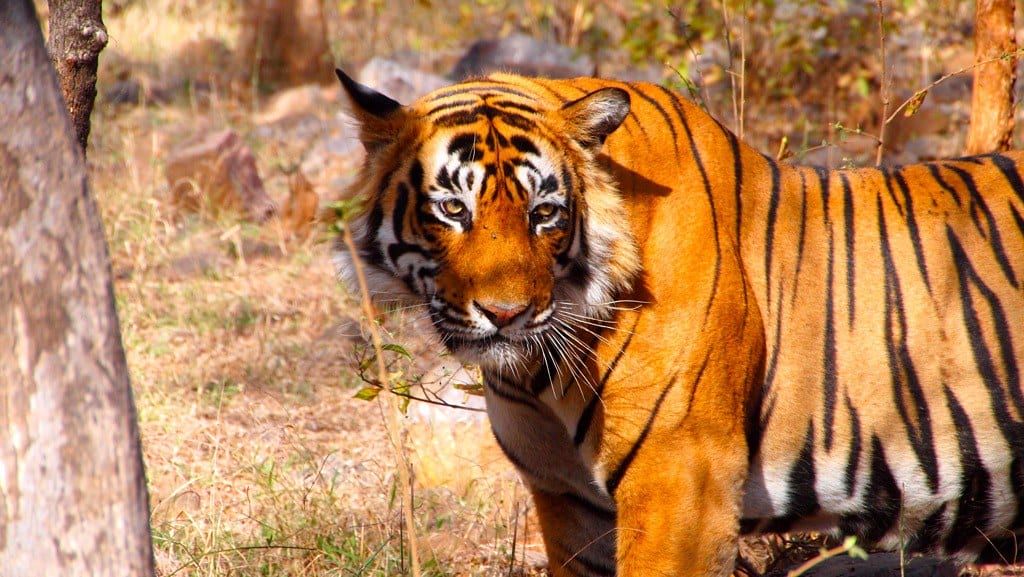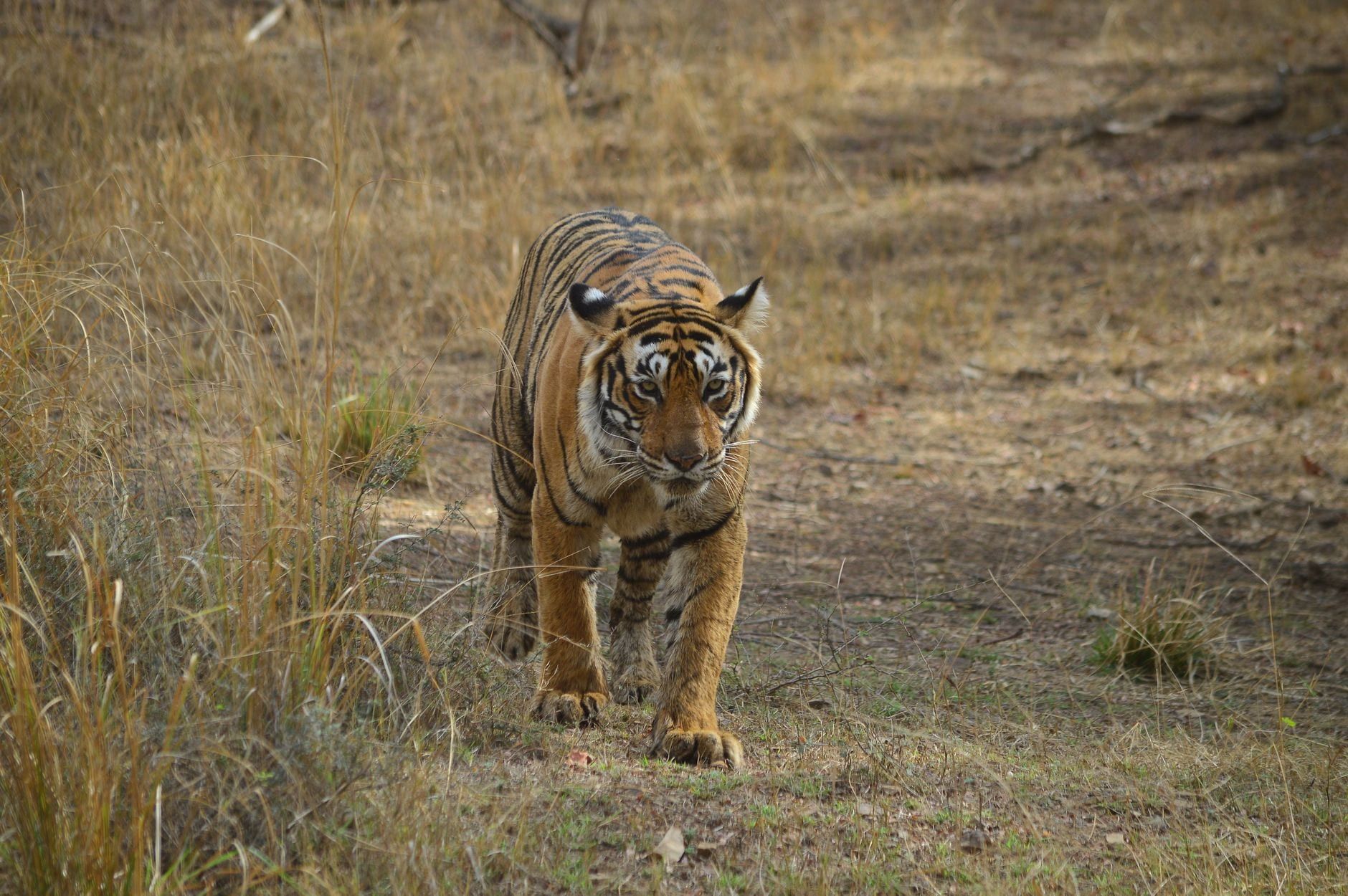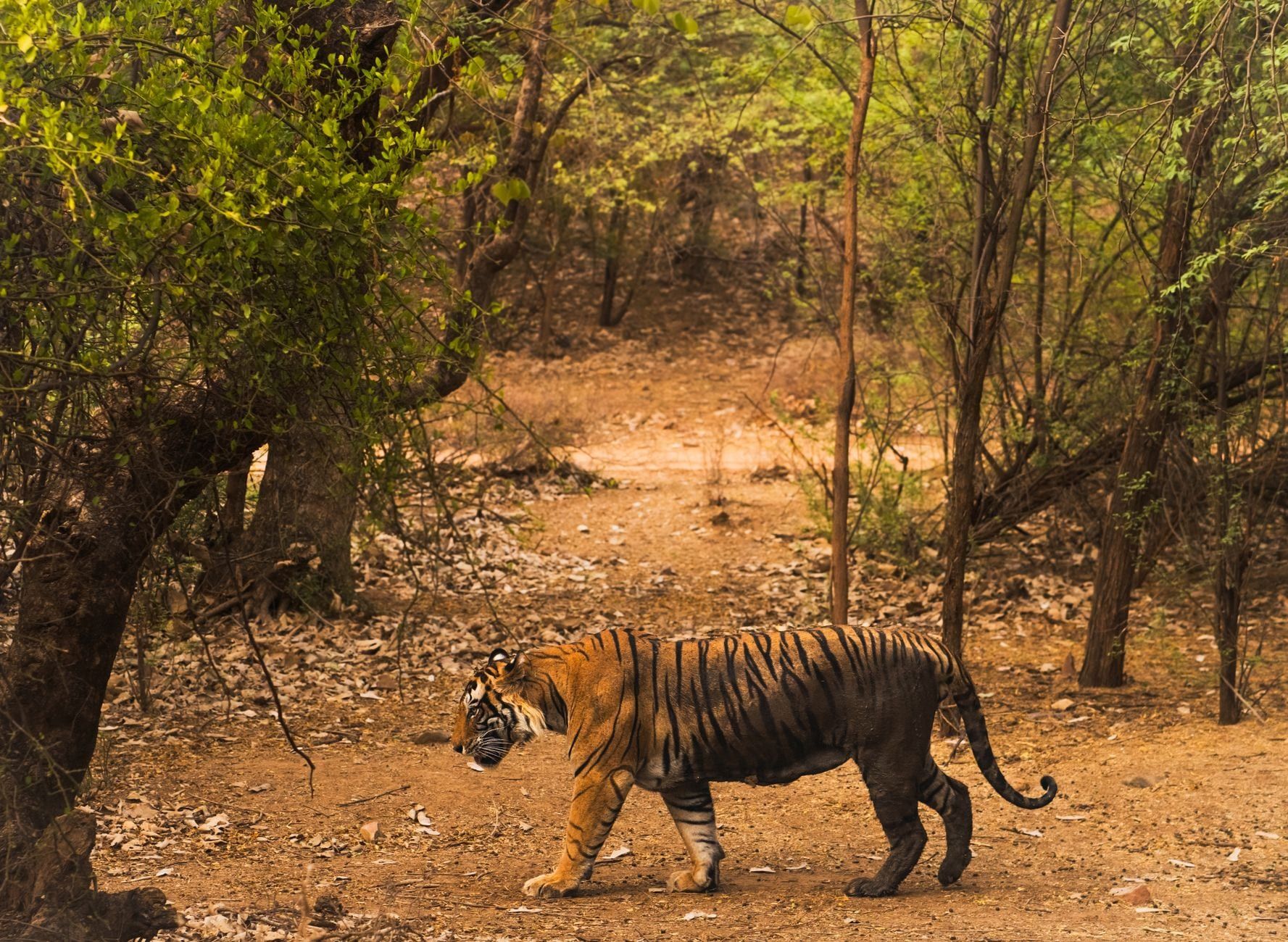
Ranthambore National Park covers 1,334 sq km of dry deciduous forest in Sawai Madhopur district, Rajasthan, where the Aravalli and Vindhya hill ranges meet. Around 88 tigers lived here as of 2024-25, and they're unusually relaxed around vehicles — which is why this is one of the best places in the world to watch a wild Bengal tiger in daylight.
Most visitors bolt on two or three nights between Jaipur (180 km, about three hours by road) and Agra on a Golden Triangle route. The park deserves them. A 10th-century UNESCO fort stands inside the reserve, three lakes pull in crocodiles and painted storks, a women's craft collective works on the edge of town, and a river sanctuary an hour away shelters gharials — fish-eating crocodilians now rarer than tigers.
Short on planning time? These are the experiences to build the trip around, in rough priority order:
- Tiger safari by jeep or canter through the park's 10 zones
- The 10th-century Ranthambore Fort and Trinetra Ganesh Temple
- Padam Talao, Raj Bagh and Malik Talao from the safari vehicle
- Birdwatching at the park lakes and nearby Surwal Lake
- A Chambal river boat safari at Palighat
- Dastkar crafts, the art school and the natural history museum
- Hot air ballooning or a night in a luxury tented camp
The basics are simple. Tourism runs 1 October to 30 June, with two 3.5-hour game drives a day. Nothing inside the reserve is explorable on foot — every lake, ruin and water hole is seen from a forest-registered jeep or canter with a government guide aboard. Our guide to getting to Ranthambore covers trains, buses and self-drive, and tours from Jaipur handle the transfer if you'd rather not arrange it yourself.
Ranthambore at a Glance
This is a reserve that grew from a royal hunting ground into one of Project Tiger's original reserves in 1973-74, then a national park in 1980. After poaching cut the population to about 15 tigers in the early 2000s, strict protection rebuilt it. Today the tiger reserve spans 1,411 sq km — the Banas River bounds it north, the Chambal south — with more than a dozen lakes and streams threading dhok forest, grassland and rocky ridges.
The reserve sits 180 km southeast of Jaipur and 230-240 km from Agra, both direct by rail or road, which is why it slots so neatly into a Golden Triangle week.
Tiger Safaris: Jeep vs Canter, Costs, Timings & Booking
A Ranthambore game drive puts you in an open vehicle for 3.5 hours on bumpy dirt tracks, threading grassland, dhok forest and rocky ridges. Tigers here lounge on the tracks, hunt sambar in daylight and stroll between vehicles — but every drive is still a roll of the dice, and nothing is guaranteed.
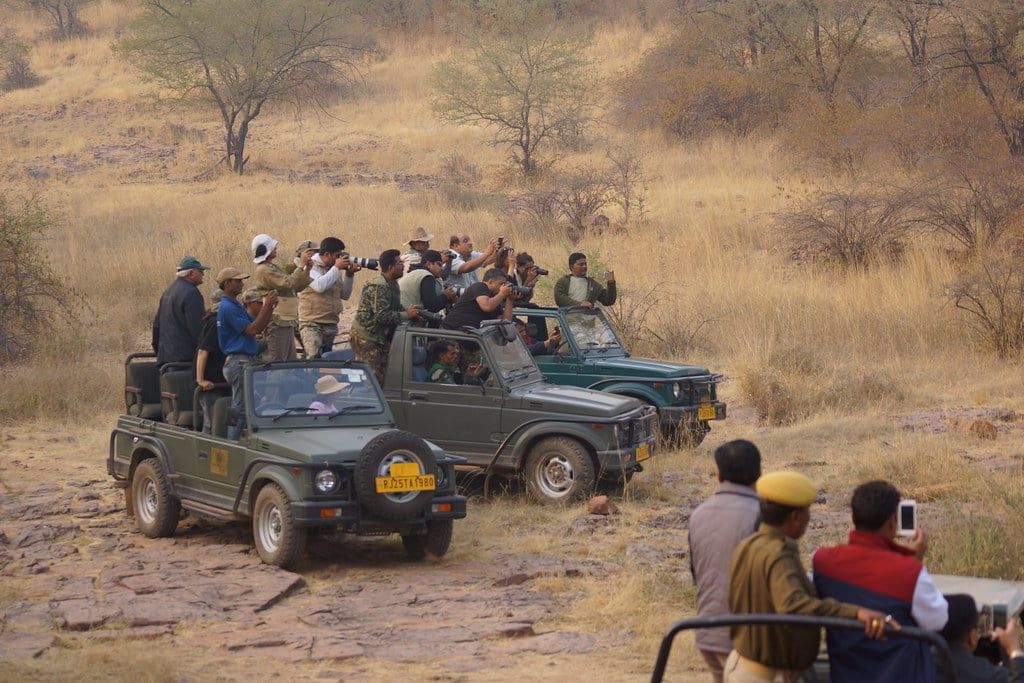
Tigers aside, the reserve holds leopards, sloth bears, sambar, marsh crocodiles, wild boar and 315 recorded bird species. Our guide to Ranthambore's animals runs through what else to watch for between the big cat moments.
Jeep vs Canter: Which Vehicle to Book
A Gypsy jeep seats six and moves fast; photographers and anyone who values flexibility should pay the premium. The 20-seat canter is the budget option — slower, higher up, and honestly fine for families who mainly want to be there. Both run morning and afternoon slots in every zone.
| Vehicle | Indian nationals | Foreign nationals |
|---|---|---|
| Shared Gypsy jeep (6 seats) | INR 2,200-2,500 | INR 4,500-5,500 |
| Shared canter (20 seats) | INR 1,500 | INR 3,800-4,550 |
| Children under 5 | Free (on an adult's lap) | Free (on an adult's lap) |
The price bundles everything except tips. About INR 200-300 for the driver and the same for the guide per drive is the local norm, so carry small notes.
Timings and Booking
Two drives run daily, and gate times shift with the seasons:
| Dates | Morning drive | Afternoon drive |
|---|---|---|
| 1-31 October | 6:30-10:00 AM | 2:30-6:00 PM |
| 1 November - 31 January | 7:00-10:30 AM | 2:00-5:30 PM |
| 1 February - 31 March | 6:30-10:00 AM | 2:30-6:00 PM |
| 1 April - 15 May | 6:00-9:30 AM | 3:00-6:30 PM |
| 16 May - 30 June | 6:00-9:30 AM | 3:30-7:00 PM |
Book through the official Rajasthan Forest Department portal (SSO login at sso.rajasthan.gov.in) as soon as your dates are fixed — core zones and Gypsies sell out weeks ahead in peak season. Each account is capped at six bookings a month, permits are non-refundable and zone-specific, and you must carry the original photo ID you booked with. Registered hotels can book on your behalf. Arrive at the gate 30-45 minutes early; late arrivals forfeit the drive. Full details are on our park hours and fees page, and vetted tiger safari tours bundle the permit logistics if you'd rather skip the paperwork.
How to Pick Your Safari Zone
Ranthambore's 10 zones split into a core (1-5) and a buffer (6-10). You don't choose freely: permits are zone-specific and zones are allotted at check-in unless you pay a premium-zone surcharge. Treat anyone promising a "guaranteed tiger zone" as a red flag.
For tigers, target zones 1-5. Zone 2 is dotted with water holes and produces regular sightings. Zone 3 is the most scenic drive, taking in Padam Talao, Rajbagh Lake, Jogi Mahal and the High Point. Zone 4 covers Malik Talao and was the old territory of Machli, the tigress often filmed hunting crocodiles, and it also turns up leopards and sloth bears.
Zone 5 holds the rocky Kachida Valley, the park's best leopard habitat — leopards avoid tigers, and broken terrain suits them — plus a healthy sloth bear population. In the quieter corners, Bakaula's dense forest and water holes are dependable for tigers, while Lakarda and Anantpura are the places for sloth bears and Indian striped hyenas.
Zones 6-10, the buffer, draw fewer vehicles and still deliver sightings — and they're the only option once the monsoon arrives. Wherever you land, wildlife safari tours with experienced local guides read alarm calls and fresh tracks better than any zone number can.
Best Time to Visit Ranthambore
October to March is the comfortable window. The forest is green after the monsoon, migratory birds arrive, and daytime temperatures stay mild — though December and January mornings bring fog that can swallow a whole drive, and tigers can be harder to find in thick greenery.
April to June is brutal (35-43°C) and best for sightings. Water holes shrink, tigers and prey concentrate around the lakes, and dry grass opens sightlines; photographers who can take the heat book the earliest morning drives. July to September, the core closes entirely — zones 6-10 may run, weather permitting, but if tigers are the goal, don't plan these months.
Early-morning and late-afternoon drives beat middays year-round. Our month-by-month best time to visit Ranthambore guide goes deeper on the trade-offs.
Ranthambore Fort and the Trinetra Ganesh Temple
The fort is the one landmark inside the park you explore on your own two feet — no safari permit needed, and the perfect midday filler between drives.
Climbing Ranthambore Fort
Begun in the mid-10th century under the Chauhan ruler Sapaldaksha and inscribed by UNESCO in 2013 as one of the Hill Forts of Rajasthan, the fort rises 700 ft above the jungle. Inside the walls sit massive stone gateways, water tanks, the Mahadeo Chhatri and 12th-13th century Hindu and Jain temples. The rampart walk gives the best panorama of the reserve's lakes and forest anywhere.
Reaching it takes a 20-30 minute drive from the gates plus a steep 20-30 minute climb; allow two to three hours and carry water. Langur and macaque troops patrol the gateways and snatch loose items, so zip everything. The midday gap between safaris is the natural slot, though early morning or late afternoon is cooler and better lit.
Trinetra Ganesh Temple
Within the fort stands the Trinetra (three-eyed) Ganesh temple, built by King Hammir and counted among the oldest Ganesh shrines in Rajasthan. It's a working temple that draws devotee crowds, especially at Ganesh Chaturthi. Cover shoulders and legs.
Lakes, Ruins and Landmarks Inside the Park
Three lakes anchor the park's best scenery, all inside zones 3-4 — and all strictly viewed from the vehicle. You cannot walk to Padam Talao, enter the Raj Bagh ruins, or stay at Jogi Mahal; the rules exist because this is tiger territory.
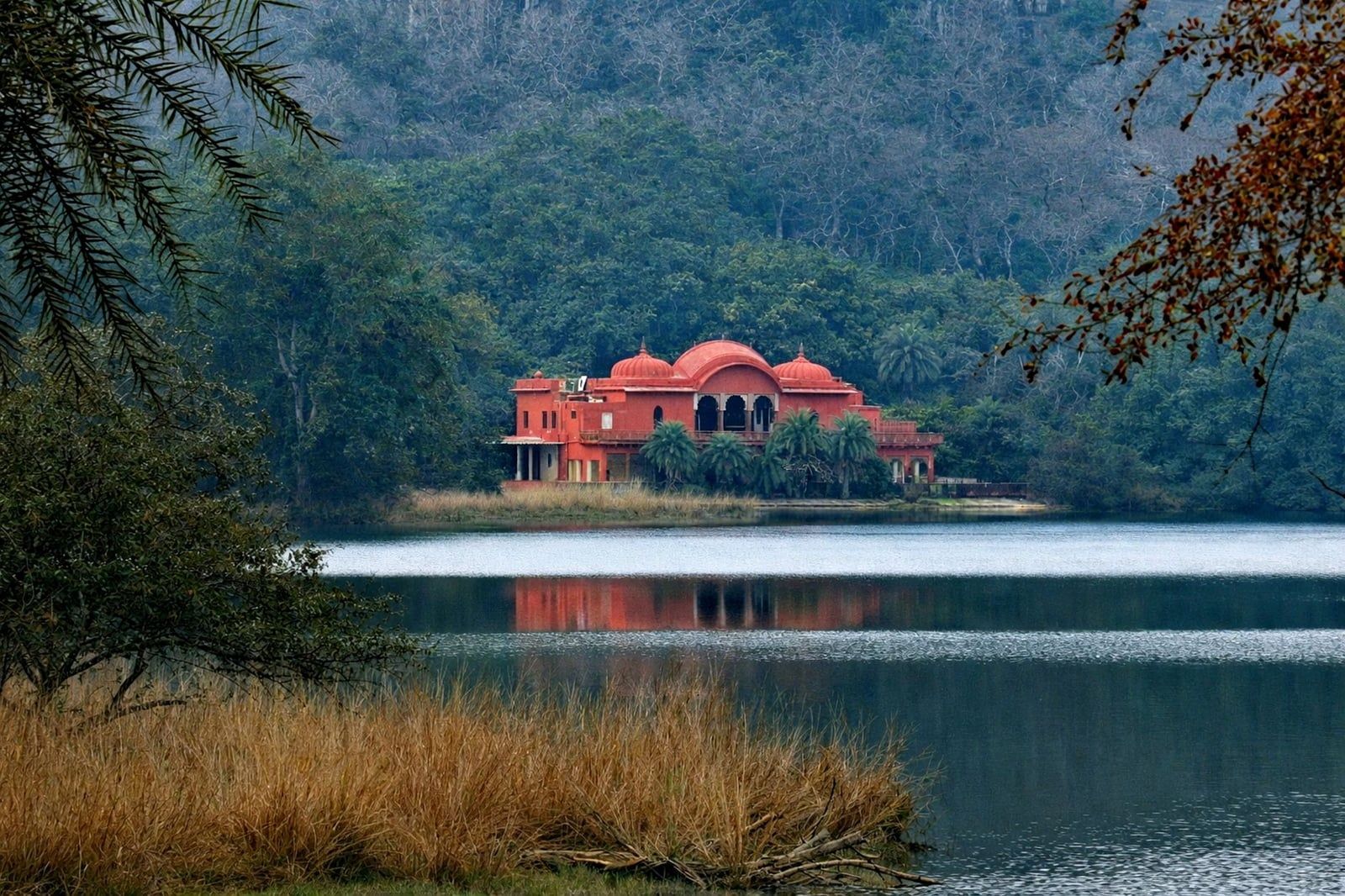
Padam Talao
The largest lake is named for its lotus blooms and edged by the red-roofed Jogi Mahal, once the Jaipur royals' hunting lodge and now a forest rest house where stays are banned. One of India's largest banyan trees grows nearby. Sambar come to drink at dawn, painted storks and herons work the shallows, and mugger crocodiles warm themselves on the banks — all with the fort ridge as a backdrop.
Raj Bagh Talao and the Ruins
Between Padam Talao and Raj Bagh Talao stand the Raj Bagh ruins: crumbling pavilions, arches and stepped baths, half-drowned in water and wrapped in strangler figs. This is the frame from countless tiger documentaries. The ruins are a tiger hideout — no entry, viewing from a distance only. The lake itself was the territory of Machli, the tigress famous for hunting crocodiles here.
Malik Talao
The smallest of the three is the marsh-crocodile lake. Kingfishers, waders and wintering ducks crowd its margins, and the water is often glass-calm on early drives.
Birdwatching In and Around the Park
Ranthambore's 315 recorded bird species make it a real birding destination. Crested serpent eagles and changeable hawk-eagles hunt from bare trees, Indian paradise flycatchers flit through the dhok forest, and grey hornbills and woodpeckers are constant companions on any drive.
The lake margins of zones 3-4 concentrate the action — painted storks, herons and waders in the shallows — and winter adds migrants to the mix.
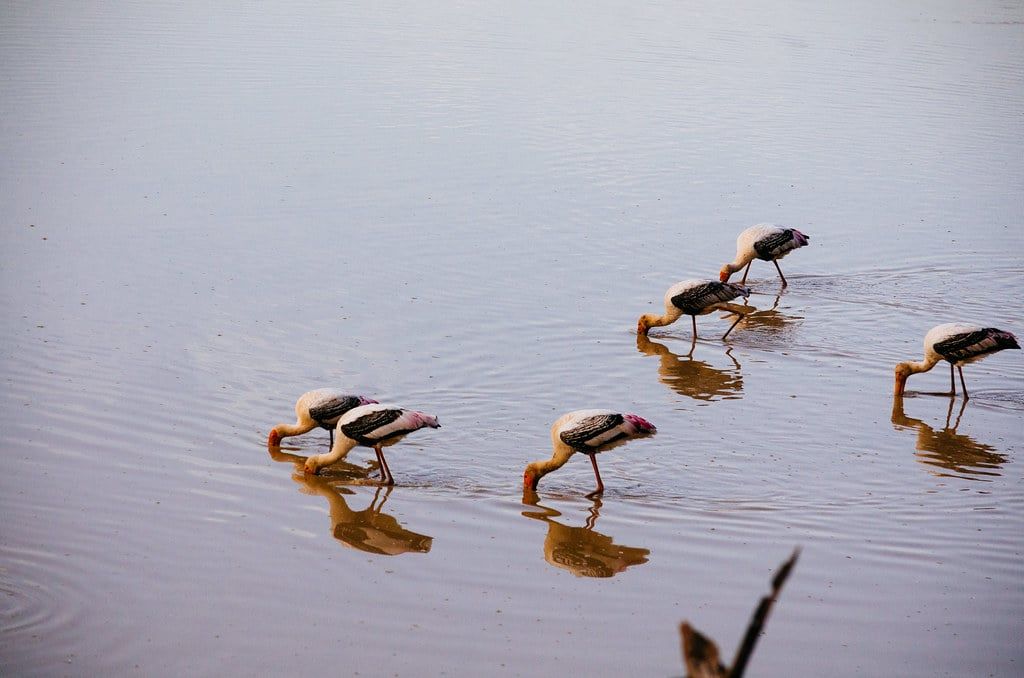
For a standalone morning, head to Surwal Lake, a shallow village lake about 10 km from Sawai Madhopur. Between November and March it fills with ducks, waders, pelicans and raptors against a rural Rajasthani backdrop. It's free, reachable by auto-rickshaw, and perfect for the midday gap while the park is closed. Bring binoculars; the birds keep their distance.
Chambal River Boat Safari: The Best Day Trip
The National Chambal Gharial Sanctuary at Palighat is about 45 km — an hour's drive — from the park gates, and it's the best structured day trip in the area. Boat rides on the clean, ravine-fringed river deliver close sightings of gharials, the slender fish-eating crocodilians now rarer than tigers, plus marsh crocodiles, otters and wading-bird colonies that include Indian skimmers.
The sanctuary lies in a different direction from the park gates, so a morning safari and an afternoon boat ride fit into one day. Water wildlife, calm river, almost no other boats. Book it for your third day or any rest afternoon.
Culture, Crafts and Museums in Sawai Madhopur
Sawai Madhopur town fills every midday gap the park leaves open — and most of it is free.
Dastkar Ranthambore and Shilpgram
Dastkar Ranthambore is a women's craft initiative founded in 1989 for villagers who lost forest access when the reserve expanded; it now counts 300+ artisans producing block-printed textiles, embroidery and handmade bags. The centre near Sherpur is 15-20 minutes from the park hotels — you can watch printing and dyeing and buy direct. Shilpgram, a craft village near Ramsinghpura, displays regional crafts alongside.
Ranthambore School of Art
The school trains local artists in conservation-themed wildlife painting — tigers, mostly. Originals and prints are for sale, and the proceeds support the artists' work around the park.
Rajiv Gandhi Regional Museum of Natural History
About 9 km from Sawai Madhopur station, this is India's fourth regional natural history museum, with ground-floor exhibits on Rajasthan's biodiversity. A solid family filler, and a good rainy-day fallback. Closed Mondays.
In town, the Chamatkar Jain Temple, dedicated to Lord Adinath, and the hilltop Kala Gaura Bhairav Temple each reward an hour between drives; the Amreshwar Mahadeo shrine sits in a gorge on the fort road. All are free, working places of worship.
Bucket-List Extras: Hot Air Ballooning and Luxury Glamping
From October to March, hot air balloon rides float at around 4,000 ft for roughly an hour over forest, lakes and villages — a different register from a game drive, and a good fit for anyone who wants the landscape without the dust.
Ranthambore also has a dense cluster of serious luxury tented camps: the Oberoi's Vanyavilas, SUJAN Sher Bagh and Aman-i-Khas. You pay for the tent, the food and the guiding — worth it for a celebration trip, a first safari you want friction-free, or a second visit once the tiger box is ticked.
How Many Days You Need: A 2-3 Day Plan + Safari Tips
Two nights is the practical minimum; three lets you breathe. Every drive is allotted a different zone, so each additional safari is another roll of the dice — most visitors who do three or four drives see at least one tiger, and single-safari visitors often don't.
- Day 1: morning and afternoon safaris in different zones.
- Day 2: dawn drive, fort and Dastkar at midday, afternoon drive.
- Day 3: Chambal boat safari or Surwal Lake birding before checkout.
Tweak to taste. Families: book the canter, swap the fort climb for the museum with under-5s, and carry snacks — there are no facilities inside the reserve. Photographers: a private jeep, zones 3-5, and the April-June window. Couples: a night in a tented camp plus the Chambal afternoon. If you want a vehicle and itinerary built around you, private tours cover the whole sequence.
Whatever you book, pack like this:
- Neutral earth tones — khaki, olive, beige; no bright colours or perfume.
- Layers: winter dawns feel near 0°C in an open vehicle, middays don't.
- A dust scarf or buff; the tracks throw up grit when vehicles pass.
- Binoculars and a camera with zoom — phones are banned in the core zones.
- Small INR notes for tips and the gate porters.
One last scheduling trap: zones 1-5 close every Wednesday and zones 6-10 every Tuesday. If you're booking back-to-back drives, stagger the days or you'll lose one to the rotation.
Frequently asked questions
How many days do you need in Ranthambore?
Plan two or three nights, which fits three to four game drives. Each drive runs in a different zone, so more safaris sharply improve your odds; use the midday gaps for the fort, museum or crafts centre.
Which safari zone is best for tiger sightings?
Zones 1-5 are the core and the best bets: Zone 2 for water holes, Zone 3 for the lakes and Raj Bagh ruins, Zone 4 for Malik Talao and leopard territory. Zones are allotted at check-in, and sightings stay luck-dependent across all ten.
How much does a Ranthambore safari cost?
Roughly INR 2,200-2,500 per shared jeep seat for Indian nationals and INR 4,500-5,500 for foreigners; canter seats run about INR 1,500 and INR 3,800-4,550. Permit, vehicle and guide are included. Half- and full-day jeep charters formerly cost INR 46,000-72,000 but are reportedly discontinued — confirm when booking.
Should I book a jeep or a canter safari?
A six-seat Gypsy jeep suits photographers and anyone wanting flexibility; the 20-seat canter is the budget option for families. Both run morning and afternoon slots in every zone.
When is Ranthambore National Park closed?
Core zones 1-5 close from 1 July to 30 September for the monsoon; buffer zones 6-10 may operate, weather permitting. The season runs 1 October to 30 June, and zones close weekly on rotation — 1-5 on Wednesdays, 6-10 on Tuesdays.
What is the best time of year for tiger sightings?
April to June is hottest but gives the best odds, as shrinking water holes concentrate tigers and prey. October to March is more comfortable, with green forest and wintering birds. Early-morning and late-afternoon drives are the productive slots.
Can you enter the Raj Bagh ruins or walk to Padam Lake?
No. The ruins sit between Padam Talao and Raj Bagh Talao in tiger territory, and no part of the park is accessible on foot — both are viewed from the safari vehicle. Stays at Jogi Mahal are also banned.
What should I wear and pack for a Ranthambore safari?
Neutral-coloured layers — dawn drives start near freezing in winter and heat up fast — plus binoculars, a dust scarf and a camera. Mobile phones are banned in the core zones, so don't count on yours.